Abstract
Endometriosis is a complex gynecological condition affecting nearly 10% of reproductive-aged women. This report updates a 2017 MSMR report of gynecological conditions, including endometriosis, from 2012 through 2016 among U.S. active component service women. The current report utilized medical encounter data from 2017 through 2024 to assess the incidence of endometriosis and its health care burden among U.S. active component service women. Factors related to co-occurring gynecological conditions, deployment, parity, and contraceptive use were also examined. Crude incidence rates and incidence rate ratios with 95% confidence intervals were calculated. The overall crude rate of endometriosis was 32.8 cases per 10,000 person-years and increased approximately 42.0% from 2017 to 2024. Incidence rates increased with age and were higher among nulliparous and never-deployed service women. Additionally, obese and underweight service women had higher incidence rates. Menorrhagia was the most common co-occurring condition, with oral birth control the most common form of contraceptive among incident cases. Identification of at-risk service women may help formulate targeted policies for earlier diagnosis to improve both quality of life and military readiness.
What are the new findings?
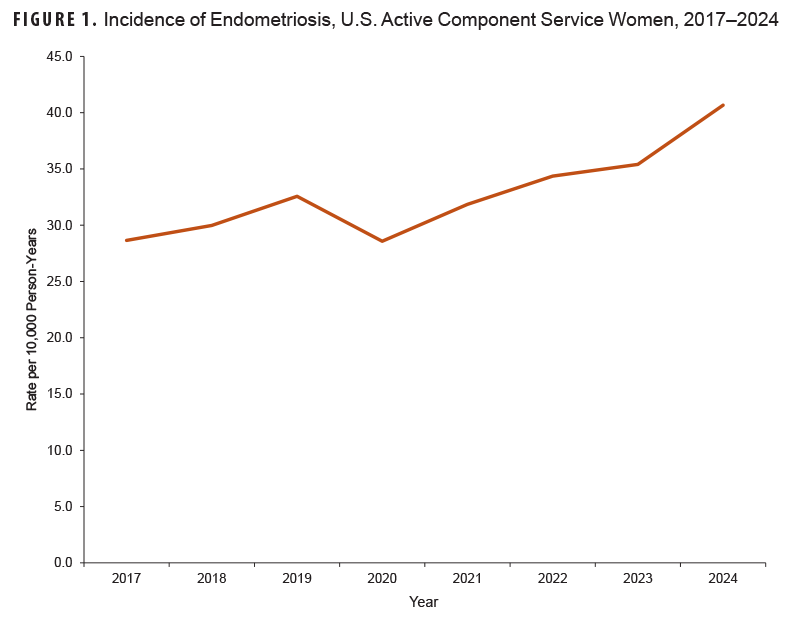
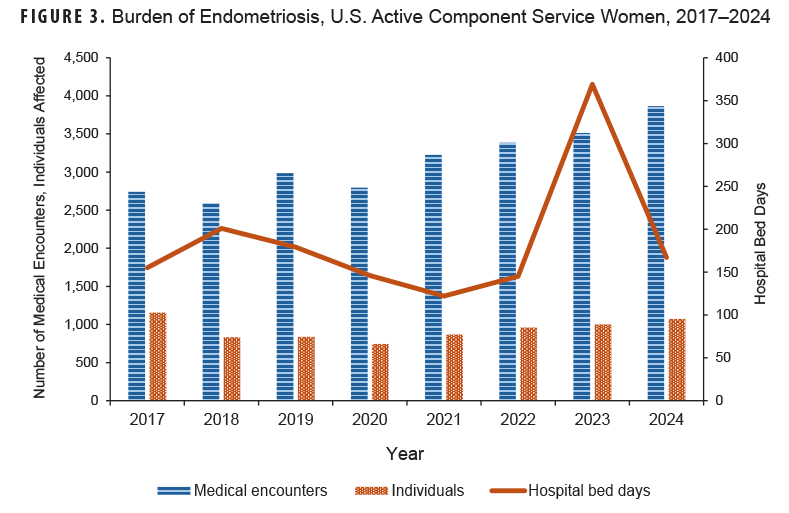
Incidence of endometriosis increased during the surveillance period, from 28.7 cases per 10,000 person-years in 2017 to 40.7 cases per 10,000 person-years in 2024, coincident with a general increase of medical encounters for endometriosis, from 2,740 medical encounters in 2017 to 3,864 medical encounters in 2024. Service women who were older, obese or underweight, nulliparous, and never deployed had higher incidence rates.
What is the impact on readiness and force health protection?
Endometriosis is associated with a multitude of symptoms and co-occurring gynecological conditions that can negatively affect daily life, military readiness, and deployability. These findings enable the Military Health System to better identify at-risk service women and formulate policies for earlier diagnosis and treatment, improving quality of life in addition to preserving military readiness.
Background
Endometriosis is a complex gynecological condition in which endometrial-like tissue grows outside the uterusAlso known as the womb, the uterus is the female reproductive organ where a baby grows. uterus.1 Symptoms of endometriosis include dysmenorrhea, dyspareunia, severe pelvic pain, and infertility, although some women present as asymptomatic.2 Approximately 10% of reproductive-age women are affected by this condition2,3; however, true prevalence may be under-estimated due to differing case criteria and diagnostic biases in many studies.3,4 Furthermore, prevalence estimates may be influenced by the use of surgical visualization to obtain definitive diagnosis in addition to delays in surgical diagnosis from symptom onset, which average 7 years.5 Socio-demographic characteristics, reproductive history, contraception use, personal habits, and body characteristics have been evaluated as potential risk and protective factors for endometriosis, but the literature is inconsistent.2,6
Women account for approximately 17% of U.S. active component service members, of whom approximately 98% are of reproductive age (ages <20–49 years).7 From 2012 to 2016, endometriosis affected an average of 1,113 U.S. active component service women (ACSW) annually, accounting for an annual average of 2,470 medical encounters and 195 bed days each year.8 Those findings suggest a significant loss of duty time for ACSW due to endometriosis, as well as a heavy burden on the Medical Health System (MHS). Older ACSW, those in the Army, and non-Hispanic Black service women were reported to have higher incidences of endometriosis than their respective counterparts.8 Co-occurring conditions, including menorrhagia, polycystic ovarian syndrome (PCOS), and uterine fibroids, may also put service women at a higher risk for endometriosis.8
Risk and protective factors for endometriosis are inconsistent in the literature.2,9 Among protective factors, an inverse relationship between body mass index (BMI) and endometriosis has been demonstrated.2,6 Furthermore, women of greater parity have also shown reduced risk of endometriosis when compared to nulliparous women and women with lower numbers of pregnancies.10,11 In addition, current or recent oral contraceptive use (risk ratio 0.4; 95% CI 0.2, 0.7) reduced risk of endometriosis by 60% compared to never-users; however, protective effects of oral contraceptives dissipate among former users.2 While current or recent intrauterine device (IUD) use has demonstrated reduced risk of endometriosis, other studies have shown no association between IUDs and endometriosis diagnosis.2
From 2012 to 2016, the incidence of endometriosis among ACSW was reported as 30.8 cases per 10,000 person-years (p-yrs).8 This rate is notably higher than a 2006–2015 U.S. population-based study that reported an average incidence rate (IR) of 24.3 cases per 10,000 p-yrs.12 While health care accessibility and affordability provided by the MHS could explain the higher incidence of endometriosis in the military population, when compared to the civilian population, there is no clear reason why military women are more likely to suffer from endometriosis. Military service-related effects—of deployment, mental health, and reproductive health—could offer other explanations for this anomaly, however.9,13
Combat ACSW must be mission ready to deploy; endometriosis and symptomology may hinder this ability, however. Furthermore, combat-related deployments have been linked to physical and mental health issues.14,15 Female veterans of Operation Enduring Freedom (OEF) and Operation Iraqi Freedom (OIF) with mental health issues were more likely to receive a diagnosis of endometriosis compared to female veterans without mental health issues; differences were not found to be due to demographics, service characteristics, or primary care.9 Negative coping strategies due to personal- and deployment-related stressors may influence reproductive health risks such as unintended pregnancy or deprioritized reproductive health care.13 Additionally, women who served in OEF, OIF, and Operation New Dawn (OND) with deployments longer than 9 months were more likely to be diagnosed with infertility,15 a condition linked to endometriosis.2 A recent report of ACSW of reproductive potential found incidence of infertility at 77.5 cases per 10,000 p-yrs16; infertility affects 30.0–50.0% of women with endometriosis.17 These effects not only raise concerns about reproductive health but force readiness overall.
Previous reports on gynecological disorders among ACSW showed decreased overall annual incidence for all conditions evaluated—with the exceptions of endometriosis and uterine fibroids; IRs for endometriosis and uterine fibroids remained stable.8 While updated incidence and burden research for uterine fibroids exists,18 there is a lack of literature singularly focused on endometriosis among ACSW.
While several factors have been consistently observed as protective against diagnosis for endometriosis, those findings have not been widely reported for military populations. The purpose of this study was to assess the incidence of endometriosis diagnosis and its health care burden among U.S. ACSW. Due to the lag in time between onset and diagnosis, true incidence of endometriosis could be determined; therefore, all references to incidence in this report refer to diagnosis incidence rather than onset of symptom incidence. Compared to prior research on this population,8 relationships between incident endometriosis and deployment, BMI, parity, and contraceptive use were explored, as these factors may influence endometriosis diagnoses. Co-occurring gynecological conditions and endometriosis were also analyzed, similar to previous reporting,8 to help better understand the reproductive health of ACSW.
Methods
Study population
The study population consisted of all ACSW ages 17–62 years in any branch of service of the U.S. Armed Forces, excluding the Coast Guard, from January 1, 2017 through December 31, 2024. Demographic, deployment, and inpatient and ambulatory care medical encounter records were obtained from the Defense Medical Surveillance System (DMSS); deployment data, only available through December 2022, were analyzed to determine numbers and lengths of deployments at any time prior to incident dates. Demographic variables included age, service branch, racial or ethnic group, rank, marital status, BMI, and occupation. BMI was obtained through the Defense Centers for Public Health–Portsmouth (DCPH-P) MHS Data Repository (MDR) and Periodic Health Assessments (PHAs). BMI records were excluded if height was less than or equal to 1 meter (m); height greater than or equal to 2.5 m; weight less than or equal to 20 kilograms (kg); weight greater than or equal to 180 kg; or obtained during pregnancy. The BMI record closest to the incident date was used for cases, while the BMI record closest to the start of a service record was used for the remaining population.
International Classification of Diseases, 9th and 10th revisions, Clinical Modification (ICD-9-CM/ICD-10-CM) codes were used to determine endometriosis diagnoses and co-occurring gynecological conditions, including menorrhagia, PCOS, uterine fibroids, and infertility (Table 1). In addition to ICD-9-CM/ICD-10-CM codes, Procedure Coding System (ICD-9-PCS/ICD-10-PCS) codes and Current Procedural Terminology (CPT) codes were used to identify prior parity and current contraceptive use (Table 1).
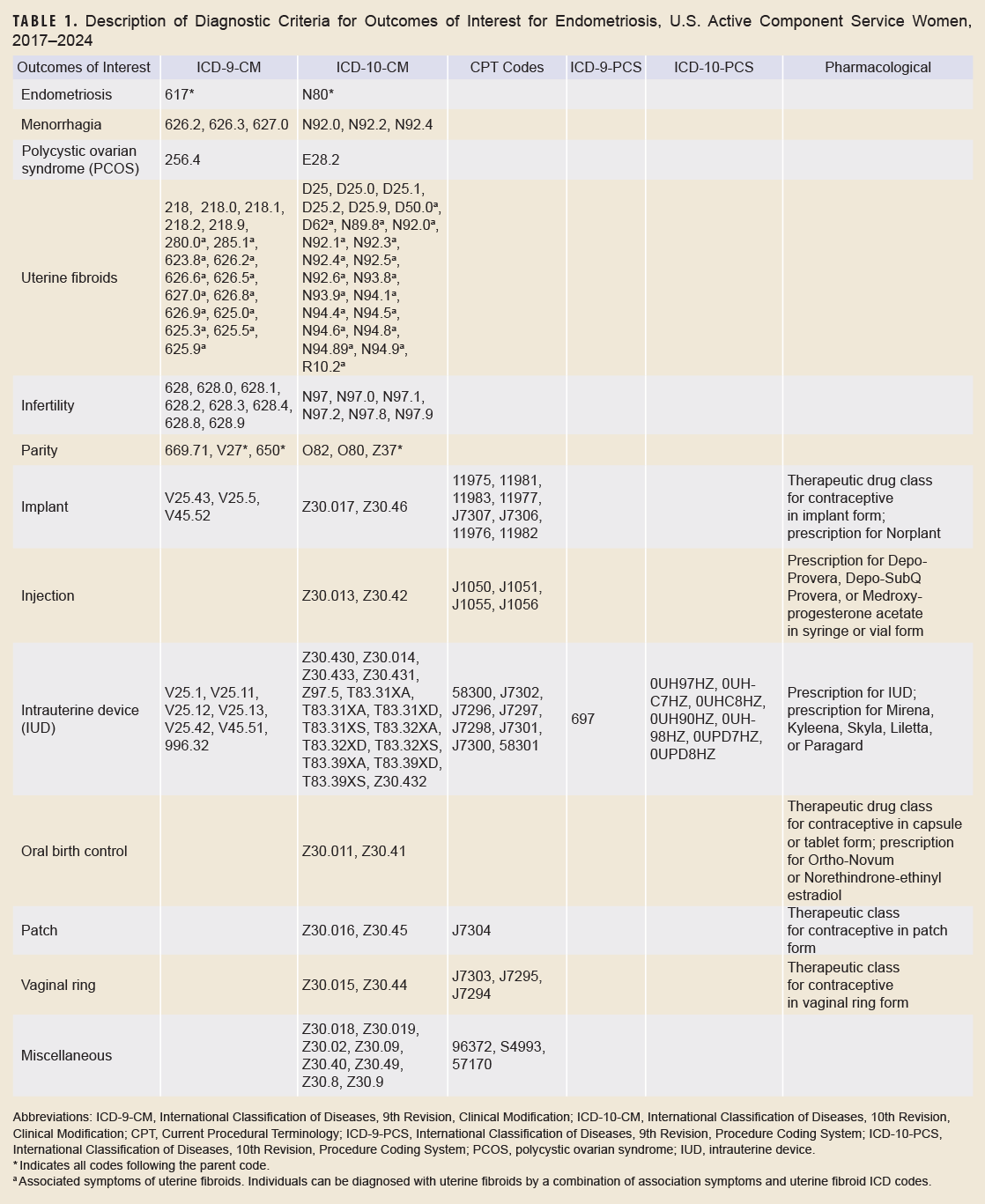
Parity was defined as a delivery-related code (Table 1) in any diagnostic position prior to the incident date. Delivery events were counted once every 280 days and recorded as a binary variable (‘yes’ or ‘no’) and as a categorical variable representing the number of births (0–3+). Current contraceptive use was defined as use of at least 1 contraceptive type: implant, injection, IUD, oral birth control, patch, vaginal ring, or miscellaneous type (i.e., unspecified or not already listed). Service women were counted once per category. Current use for long-acting contraceptives was determined within 5 years preceding the incident date for IUDs and within 3 years preceding the incident date for implants; all other contraceptive types were determined as current use within 12 months preceding the incident date. Pharmaceutical data were also utilized to analyze contraceptive use for implants, injections, IUDs, oral birth control, patches, and vaginal rings (Table 1).
Case definition
A case of endometriosis was defined as an individual with 1 inpatient encounter with a case-defining code in any diagnostic position or 2 ambulatory encounters within 180 days with a case-defining code in any diagnostic position.8 Individuals were counted as an incident case once per lifetime.8
Menorrhagia was defined as an individual with 1 inpatient encounter with a case-defining code in the primary diagnostic position or 2 ambulatory encounters within 180-day period with a case-defining code in any diagnostic position.19 Menorrhagia cases were counted once every 365 days.19 PCOS was defined as an individual with 1 inpatient encounter with a case-defining code in the primary or secondary diagnostic position, or 2 ambulatory encounters in any diagnostic position.20 Uterine fibroids were defined as 1 inpatient or ambulatory encounter with a case-defining code in the primary diagnostic position, or 1 inpatient or ambulatory encounter with a case-defining code in the secondary diagnostic position and at least 1 associated symptom (Table 1) in the primary diagnostic position.21 Infertility was defined as 1 inpatient encounter with a case-defining code in the primary diagnostic position or 2 ambulatory encounters with a case-defining code in the primary or secondary diagnostic position.22 PCOS and uterine fibroids counted once per lifetime, while infertility was counted once per surveillance period.20-22
Statistical analysis
Crude IRs for demographic variables and case year were calculated per 10,000 p-yrs. Parity and deployment were stratified by count, while contraceptive use was categorized by type, to assess trends. Incident rate ratios (IRRs) and 95% confidence intervals (CIs) were then calculated for baseline characteristics. Prior parity and deployment may include person-time occurring outside the surveillance period; therefore, overall person-time was used to calculate crude IRs. IRRs were not calculated for prior characteristics, as using the overall person-time produced non-comparable rate contrast. To estimate the health care burden of endometriosis, medical encounters with a case-defining code in the primary diagnostic position were examined to evaluate the total numbers of medical encounters, individuals affected, and hospital bed days. All analyses were conducted using SAS® Enterprise Guide® software (version 8.3, SAS Inst., Inc., Cary, NC).
Results
During the 8-year surveillance period, 5,733 ACSW, or 1.3% of all eligible service women during the period, were diagnosed with an incident case of endometriosis, at an overall rate of 32.8 cases per 10,000 p-yrs (Table 2).
Overall, non-Hispanic Black women (IRR 1.1, 95% CI 1.1, 1.2) and women in health care occupations (IRR 1.7, 95% CI 1.5, 2.1) (Table 2) were more likely to be diagnosed with incident endometriosis than their counterparts. Additionally, women with a marital status of married (IRR 2.1, 95% CI 1.9, 2.2) or other (IRR 2.3, 95% CI 2.1, 2.5) were twice as likely to be diagnosed with incident endometriosis.
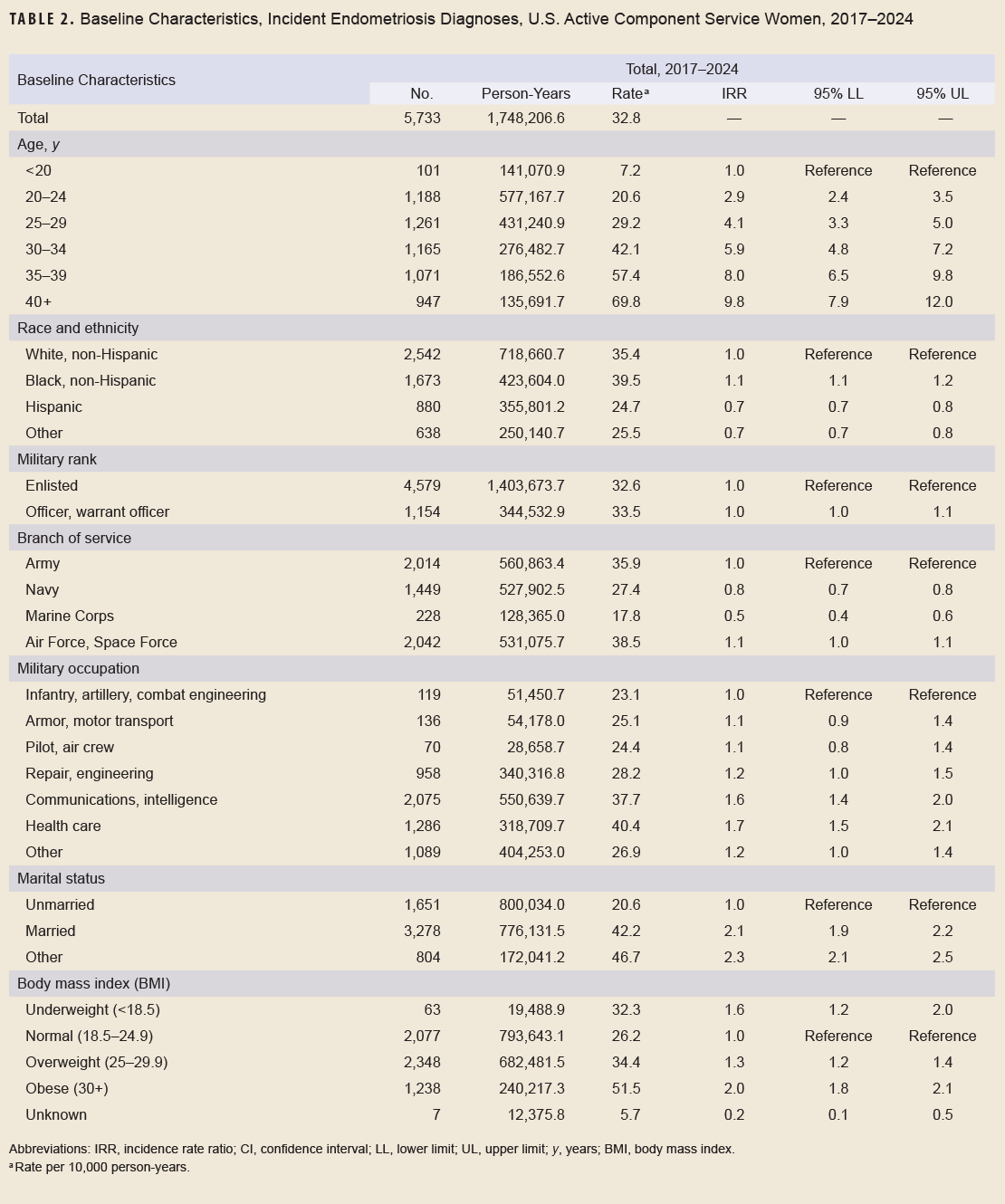
Rates of incident endometriosis increased with age, with women ages 40 years or older demonstrating the highest IR overall (69.8 cases per 10,000 p-yrs) (Table 2). This trend was generally observed throughout the surveillance period (data not shown). Overall, compared to ACSW of normal BMI, overweight women were 31.0% more likely to be diagnosed with incident endometriosis, while underweight women were 57.0% more likely, and obese women were 97.0% more likely to be diagnosed with endometriosis (Table 2).
 Among women with incident endometriosis, 23.1% had co-occurring menorrhagia, while 21.1% had co-occurring infertility, 9.8% had co-occurring uterine fibroids, and 7.3 had co-occurring PCOS (data not shown).
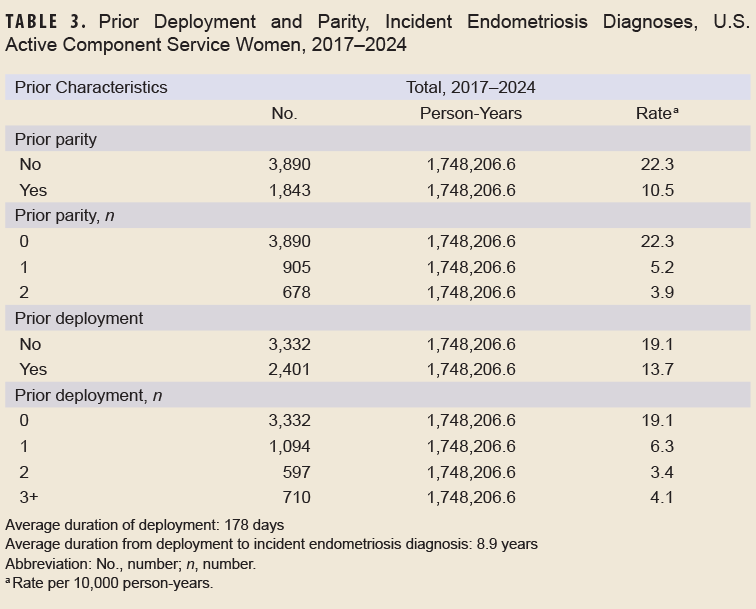
Endometriosis cases with no prior deployments had higher IRs (19.1 cases per 10,000 p-yrs) compared to women with prior deployments (13.7 cases per 10,000 p-yrs) (Table 3). Among women with prior deployments, women with 1 deployment had the highest IR (6.3 cases per 10,000 p-yrs) (Table 3). On average, prior deployments lasted approximately 6 months and occurred about 9 years prior to the incident endometriosis diagnosis (Table 3). Additionally, nulliparous women had a higher IR (22.3 cases per 10,000 p-yrs) compared to uniparous and multiparous women (10.5 cases per 10,000 p-yrs) (Table 3). With each delivery, IRs of endometriosis decreased (Table 3).
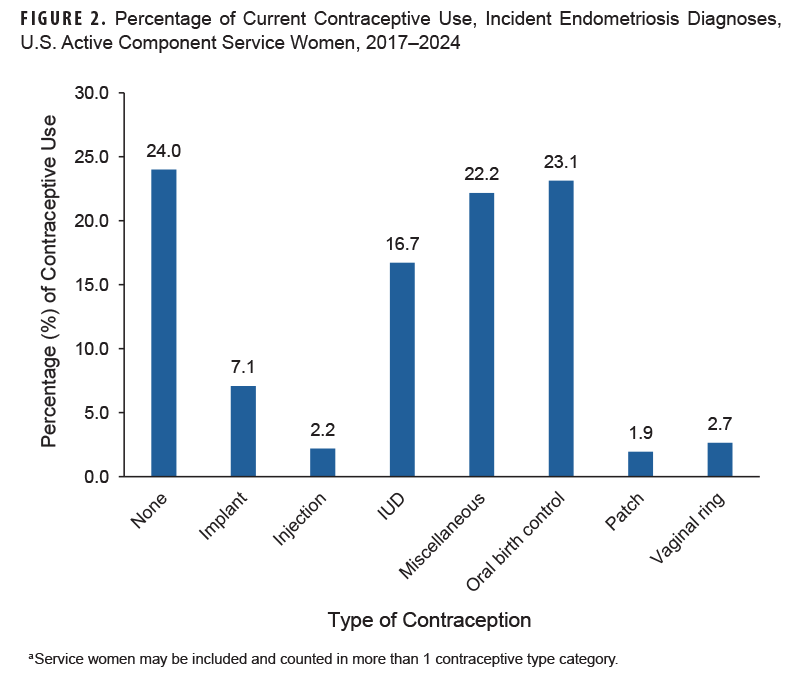
Among women with incident endometriosis, 24.0% were not currently using any form of contraceptive, while 76.0% were currently using some form of contraceptive (Figure 2). Oral birth control was the most common (23.1%) type of contraceptive used by ACSW, followed by miscellaneous type (22.2%) and IUDs (16.7%) (Figure 2).
Figure 3 presents the burden of endometriosis among ACSW. The majority of 2017–2024 medical encounters for endometriosis were ambulatory care encounters (Figure 3). The number of medical encounters remained relatively stable before 2021, when a continued annual increase began (Figure 3). The number of individuals with medical encounters decreased in 2018, but since 2020 counts have increased, along with medical encounters (Figure 3). The number of hospital bed days was at its lowest in 2021, while only 2 years later, in 2023, the highest number of hospital bed days was recorded. Counts more than doubled in 2023 compared to the previous year, but this is attributed to a small number of individuals rather than a reflection of the entire population (Figure 3).
Discussion
This study analyzed incidence of diagnosis rates of endometriosis, and this report describes the distributions of prior deployment, parity, and BMI on IRs. Co-occurring gynecological conditions, current contraceptive use, and health care burden were examined as well. Compared to the prior MSMR report on endometriosis,8 overall crude incidence of endometriosis has increased from 30.8 cases per 10,000 p-yrs during 2012-2016 to 32.8 cases per 10,000 p-yrs in 2017-2024. During the surveillance period, IRs increased nearly 42.0% from 2017 to 2024. The current findings suggest an upward trend of newly diagnosed endometriosis among ACSW. When compared to civilian women, ACSW have greater accessibility to health care and diagnosis, provided by MHS, which may explain the increase in endometriosis diagnosis, rather than reflect a true increase in cases.
Consistent with the prior reporting of endometriosis among ACSW,8 service women who were older, non-Hispanic Black race or ethnicity, and in health care occupations had higher rates of endometriosis; similar findings for age at diagnosis were reported for the general population.11 Civilian women ages 36-45 years were found to have higher IRs of endometriosis.11 Delayed diagnosis from symptom onset could explain why IRs are higher among women ages 35 years or older compared to younger service women.
Differences between racial and ethnic groups appear to be unique to the military population, when compared to the general population. Several studies have found lower incident endometriosis among non-Hispanic Black women compared to non-Hispanic White women, or no significant difference at all.11,23,24 Disparities in civilian health care and need for surgical diagnosis may explain differences among military and civilian rates.23 Further exploration of higher IRs of endometriosis among non-Hispanic Black women compared to civilian populations may be warranted.
Service women with no deployment history prior to endometriosis diagnosis had higher IRs of endometriosis compared to those with prior deployments, while women with 1 deployment had higher IRs than women with multiple deployments. These findings are somewhat unexpected, given the epidemiological associations between deployment and adverse reproductive and mental health outcomes.9,15 The IRs are crude, however, and therefore the observed difference may be due to unadjusted confounding variables rather than a true statistical difference in risk. Combat trauma could negatively influence mental health, leading to riskier sexual behaviors and avoidance of reproductive health care11; these factors lead to poorer reproductive health outcomes.13
Determining the effects of deployment on endometriosis are difficult, however, due to the timing of disease onset and disease diagnosis. In this study, deployment occurred approximately 9 years, on average, prior to endometriosis diagnosis. Additionally, women with endometriosis demonstrate poor physical performance compared to women without the condition,25 which may disqualify women from deployment, possibly inferring the ‘healthy warrior effect’, with healthier ACSW more likely to deploy. Furthermore, less than 4% of incident cases deployed following diagnosis (data not shown). These findings suggest that endometriosis diagnosis may inhibit deployment of ACSW and require greater medical management of ACSW to maintain force readiness.
BMI is reported to have an inverse relationship with endometriosis,2,6 and in this study underweight women did have overall higher crude IRs than overweight women; this finding was not evidenced throughout the surveillance period, however (data not shown). Obese service women were observed to have the highest incidence of endometriosis overall, and throughout the study. Previous research found that this inverse relationship of BMI and endometriosis was not evident among women ages 30 years or older.26 When this study examined BMI by age group, underweight ACSW ages 25-34 years had the highest IRs, while in all other age groups, obese ACSW had the highest rates (data not shown). These findings support the previous research,26 suggesting a greater association of underweight BMI with younger ACSW and endometriosis diagnosis.
Lower parity was associated with higher rates of endometriosis. Given the association between infertility and endometriosis,17 these findings may be unsurprising, however. In this population, 21.1% of women with incident endometriosis also had co-occurring infertility. Additionally, the majority of endometriosis cases in this population were currently using contraceptives prior to diagnosis. Pregnancy prevention is not the only indication for contraceptive use, as oral contraceptives are a primary or ‘first-line’ treatment for endometriosis and endometriosis-associated symptoms.27 Oral birth control was the most common contraceptive type among women in this population.
Several limitations are important to consider when interpreting these findings. The delay in obtaining endometriosis diagnosis5 creates a challenge for determining disease onset and how reproductive health, demographic, and service-related factors affect the condition. The IRs for prior parity and prior deployment were calculated using overall person-time due to an inability to calculate person-time prior to diagnosis for the population at risk, as not all ACSW at risk in the population were diagnosed with endometriosis. Additionally, the ‘healthy warrior effect’ may explain higher IRs among ACSW with no deployment history compared to those with deployment history. The crude IRs for prior parity and prior deployment should be evaluated as preliminary and with caution. Lack of a standardized case definition for endometriosis in the literature presents comparison challenges.3,4 Additionally, the difficulty of obtaining a diagnosis may obscure true incidence. Furthermore, results related to parity and contraceptive use are observational. Reasons why women are nulliparous or contraceptive users are numerous and unknown in this study. Finally, deployment data were only available through 2022, under-estimating rates of prior deployment among ACSW.
Endometriosis is associated with a multitude of symptoms2 that can affect military readiness and quality of life. Future studies should evaluate endometriosis severity to understand its effects on force readiness and health care provision. A more comprehensive cohort study of symptomology, mental health, deployment, and demographics, from accession to end-of-service contract, may better explain the effects of military service on endometriosis.
References
- Sarria-Santamera A, Orazumbekova B, Terzic M, et al. Systematic review and meta-analysis of incidence and prevalence of endometriosis. Healthcare (Basel). 2020;9(1):29. doi:10.3390/healthcare9010029
- Eskenazi B, Warner ML. Epidemiology of endometriosis. Obstet Gynecol Clin North Am. 1997;24(2):235-258. doi:10.1016/s0889-8545(05)70302-8
- World Health Organization. Endometriosis. 2023. Accessed Feb. 17, 2026. https://www.who.int/news-room/fact-sheets/detail/endometriosis
- Harder C, Velho RV, Brandes I, Sehouli J, Mechsner S. Assessing the true prevalence of endometriosis: a narrative review of literature data. Int J Gynaecol Obstet. 2024;167(3):883-900. doi:10.1002/ijgo.15756
- Nnoaham KE, Hummelshoj L, Webster P, et al. Impact of endometriosis on quality of life and work productivity: a multicenter study across ten countries. Fertil Steril. 2011;96(2):366-373.e8. doi:10.1016/j.fertnstert.2011.05.090
- Shafrir AL, Farland LV, Shah DK, et al. Risk for and consequences of endometriosis: a critical epidemiologic review. Best Pract Res Clin Obstet Gynaecol. 2018;51:1-15. doi:10.1016/j.bpobgyn.2018.06.001
- McQuistan AA, Dreyer E, Mabila SL. Midyear populations by sex, age, and race and ethnicity of active component service members of the U.S. Armed Forces, 2018–2022. MSMR. 2023;30(12):12. Accessed Feb. 17, 2026. https://www.health.mil/news/articles/2023/12/01/msmr-midyear-populations
- Stahlman S, Williams VF, Taubman SB. Incidence and burden of gynecologic disorders, active component service women, U.S. Armed Forces, 2012–2016. MSMR. 2017;24(11):30-38. Accessed Feb. 17, 2026. https://www.health.mil/reference-center/reports/2017/01/01/medical-surveillance-monthly-report-volume-24-number-11
- Cohen BE, Maguen S, Bertenthal D, et al. Reproductive and other health outcomes in Iraq and Afghanistan women veterans using VA health care: association with mental health diagnoses. Womens Health Issues. 2012;22(5):e461-e471. doi:10.1016/j.whi.2012.06.005
- Parazzini F, Ferraroni M, Fedele L, et al. Pelvic endometriosis: reproductive and menstrual risk factors at different stages in Lombardy, northern Italy. J Epidemiol Community Health. 1995;49(1):61-64. doi:10.1136/jech.49.1.61
- Missmer SA, Hankinson SE, Spiegelman D, et al. Reproductive history and endometriosis among premenopausal women. Obstet Gynecol. 2004;104(5 pt 1):965-974. doi:10.1097/01.aog.0000142714.54857.f8
- Christ JP, Yu O, Schulze-Rath R, et al. Incidence, prevalence, and trends in endometriosis diagnosis: a United States population-based study from 2006 to 2015. Am J Obstet Gynecol. 2021;225(5):500.e1-500.e9. doi:10.1016/j.ajog.2021.06.067
- Gawron LM, Mohanty AF, Kaiser JE, Gundlapalli AV. Impact of deployment on reproductive health in U.S. active-duty servicewomen and veterans. Semin Reprod Med. 2018;36(6):361-370. doi:10.1055/s-0039-1678749
- McAndrew LM, D’Andrea E, Lu SE, et al. What pre-deployment and early post-deployment factors predict health function after combat deployment?: a prospective longitudinal study of Operation Enduring Freedom (OEF)/Operation Iraqi Freedom (OIF) soldiers. Health Qual Life Outcomes. 2013;11:73. doi:10.1186/1477-7525-11-73
- Armed Forces Health Surveillance Center. Health of women after wartime deployments: correlates of risk for selected medical conditions among females after initial and repeat deployments to Afghanistan and Iraq, active component, U.S. Armed Forces. MSMR. 2012;19(7):2-10. Accessed Feb. 17, 2026. https://www.health.mil/reference-center/reports/2012/01/01/medical-surveillance-monthly-report-volume-19-number-7
- Armed Forces Health Surveillance Division. Infertility among active component service women, U.S. Armed Forces, 2019–2023. MSMR. 2025;32(5):19-25. Accessed Feb. 17, 2026. https://www.health.mil/news/articles/2025/05/01/msmr-female-infertility
- Llarena NC, Falcone T, Flyckt RL. Fertility preservation in women with endometriosis. Clin Med Insights Reprod Health. 2019;13:1179558119873386. doi:10.1177/1179558119873386
- Nieh C, Mabila SL. Incidence and health care burden of uterine fibroids among female service members in the active component of the U.S. Armed Forces, 2011–2022. MSMR. 2024;31(2):9-15. Accessed Feb. 17, 2026. https://www.health.mil/news/articles/2024/02/01/msmr-uterine-fibroids
- Armed Forces Health Surveillance Division. Surveillance Case Definition: Menorrhagia. Defense Health Agency, U.S. Dept. of War. 2015. Accessed Feb. 17, 2026. https://www.health.mil/reference-center/publications/2015/01/01/menorrhagia
- Armed Forces Health Surveillance Division. Surveillance Case Definition: Polycystic Ovarian Syndrome. Defense Health Agency, U.S. Dept. of War. 2015. Accessed Feb. 17, 2026. https://www.health.mil/reference-center/publications/2015/01/01/polycystic-ovarian-syndrome
- Armed Forces Health Surveillance Division. Surveillance Case Definition: Uterine Leiomyomas (Fibroids). Defense Health Agency, U.S. Dept. of War. 2015. Accessed Feb. 17, 2026. https://www.health.mil/reference-center/publications/2015/01/01/uterine-leiomyomas
- Armed Forces Health Surveillance Division. Surveillance Case Definition: Female Infertility. Defense Health Agency, U.S. Dept. of War. 2018. Accessed Feb. 17, 2026. https://www.health.mil/reference-center/publications/2018/09/01/female-infertility
- Katon JG, Plowden TC, Marsh EE. Racial disparities in uterine fibroids and endometriosis: a systematic review and application of social, structural, and political context. Fertil Steril. 2023;119(3):355-363. doi:10.1016/j.fertnstert.2023.01.022
- Bougie O, Yap MI, Sikora L, Flaxman T, Singh S. Influence of race/ethnicity on prevalence and presentation of endometriosis: a systematic review and meta-analysis. BJOG. 2019;126(9):1104-1115. doi:10.1111/1471-0528.15692
- Silva T, Oliveira M, Oliveira E, et al. Are women with endometriosis more likely to experience reduced physical performance compared to women without the condition? PeerJ. 2024;12:e16835. doi:10.7717/peerj.16835
- McCann SE, Freudenheim JL, Darrow SL, Batt RE, Zielezny MA. Endometriosis and body fat distribution. Obstet Gynecol. 1993;82(4 pt 1):545-549. doi:10.1097/00006250-199310000-00014
- Casper RF. ProgestinA form of progesterone; the hormone that plays a role in the menstrual cycle and pregnancy Progestin-only pills may be a better first-line treatment for endometriosis than combined estrogenAny of a group of steroid hormones which promote the development and maintenance of female characteristics of the body. Such hormones are also produced artificially for use in oral contraceptives or to treat menopausal and menstrual disorders.estrogen-progestin contraceptive pills. Fertil Steril. 2017;107(3):533-536. doi:10.1016/j.fertnstert.2017.01.003
Authors’ Affiliation
Epidemiology and Analysis Branch, Armed Forces Health Surveillance Division, Public Health Directorate, Defense Health Agency, Silver Spring, MD
Acknowledgments
The authors thank Alexis A. McQuistan, MPH, Epidemiology and Analysis Branch, Armed Forces Health Surveillance Division, for her helpful comments and suggestions during the review process.
Disclaimer
The views expressed in this report reflect the results of research conducted by the authors and do not necessarily reflect the official policy or position of the Defense Health Agency, Department of War, nor the U.S. Government.
The authors of this report are employees of the U.S. Government. This work was prepared as part of official duties. Title 17, U.S. Code Section 105 provides that copyright protection under this title is not available for any work of the U.S. Government. Title 17, U.S. Code Section 101 defines a U.S. Government work as a work prepared by an employee of the U.S. Government as part of that person’s official duties.