What are the new findings?
The hospitalization rate among U.S. active component service members in 2024 at both military and non-military medical facilities was 47.3 per 1,000 person-years, the lowest since 2015, continuing the general declining trend observed over the previous nine years. It also represents a reduction of 14.0% from the 2015 peak, and 2.8% from the 2023 rate. As in prior years, over half (55.4%) of hospitalizations for active component members were associated with primary diagnoses in two categories: mental health disorders and pregnancy conditions.
What is the impact on readiness and force health protection?
As in prior years, mental health disorders, including substance abuse disorders, were associated with the longest median hospital stay, six days; 5% of hospitalizations for mental health disorders had durations greater than 30 days. Prolonged hospitalizations, after care, and early attrition due to these common disorders can diminish not merely individual but unit operational readiness.
Background
This report documents the frequencies, rates, trends, and distributions of hospitalizations among active component service members of the U.S. Army, Navy, Air Force, Space Force, and Marine Corps during calendar year 2024. Summaries are based on standardized hospitalization records at U.S. military and non-military (reimbursed through the Military Health System) medical facilities worldwide that are routinely maintained in the Defense Medical Surveillance System.
In this report, primary (i.e., first-listed) discharge diagnoses are considered indicative of the primary cause of hospitalization. As in prior MSMR reports, summaries are based on the first three digits of the International Classification of Diseases, 10th Revision codes of the primary discharge diagnoses. Hospitalizations not routinely documented by standardized, automated records, e.g., during field training exercises or while shipboard, are not available in a centralized location for health surveillance purposes and are excluded from this report. Incidence rates were calculated per 1,000 person-years. Percent change in incidence was calculated using unrounded rates.
Frequencies, rates and trends
In 2024, 58,860 hospitalizations were recorded for ACSMs of the U.S. Army, Navy, Air Force, Space Force, and Marine Corps (Table 1); 50.6% of these hospitalizations were in non-military facilities (data not shown), compared to 46.5% in 2023.
 Between 2015 and 2024, the total crude hospitalization rates declined gradually from a high of 55.1 per 1,000 p-yrs in 2015 to a low of 47.3 per 1,000 p-yrs in 2024, representing a decrease of 14% during the 10-year surveillance period. For military facilities, the decline was more pronounced, falling from 36.8 per 1,000 p-yrs in 2015 to 23.4 per 1,000 p-yrs in 2024, about a 36% reduction over the same period. The hospitalization rates between 2015 and 2019 were relatively stable, fluctuating within a narrow range. In 2020, an inflection point occurred, with rates dropping more than 10% below the 2019 level. Although rates rebounded near pre-COVID-19 pandemic levels in 2021 and 2022, they subsequently resumed a decline, reaching their lowest levels in 2024 (Figure 1). Since 2020 was an atypical year due to COVID-19, causing disruptions in health care, this report mainly focuses on changes between 2022 and 2024.
Hospitalizations, by ICD-10 major diagnostic categories
In 2024, just 4 ICD-10 major diagnostic categories accounted for almost three-quarters (72.2%) of all active component hospitalizations: mental health disorders (29.2%), pregnancy and delivery (26.2%), injury (8.9%), and digestive system (7.9%) (Table 1). Consistent with findings for 2020 and 2022, hospitalizations for mental health disorders in 2024 accounted for more than any other major diagnostic category; 2009 was the last year in which any other diagnostic category—pregnancy and delivery—surpassed mental health disorder hospitalizations (data not shown).
The largest absolute reduction in hospitalizations occurred in the mental health disorders major diagnostic category, with 4,313 fewer hospitalizations in 2024 compared to 2022, translating into a 16.5% rate decrease (Table 1). The number (rate decrease) of pregnancy and delivery hospitalizations decreased by 1,537 (-9.1%) cases, musculoskeletal conditions by 433 (-12.0%) cases, and the ‘other’ category by 506 (-32.2%) cases. The steepest rate drop, of nearly 80% (234 fewer cases), occurred in COVID-19 hospitalizations. Additional categories with comparatively large declines included injury (-379, -2.7%), digestive system (-326, -2.4%), and signs, symptoms and ill-defined conditions (-258, -6.8%), further contributing to the overall downward trajectory.
At the same time, several major diagnostic categories increased in both frequency and rate of hospitalizations. The largest increases were observed in the respiratory system (225 additional cases, 22.6% rate increase), infectious and parasitic diseases (209, 28.1%), and skin and subcutaneous tissue (80, 16.3%) diagnostic categories.
Hospitalizations, by sex
The hospitalization rate (for all causes) for active component service women in 2024 was more than three times that of service men (112.2 per 1,000 p-yrs vs. 33.2 per 1,000 p-yrs, respectively). These data are consistent with hospitalization rate trends published in 2022 for women and men ages 18-44 years (95 per 1,000 p-yrs and 37 per 1,000 p-yrs, respectively) in the general U.S. population.1 Excluding pregnancy and delivery, the rate of hospitalizations among women (42.2 per 1,000 p-yrs) was 29.2% higher than among men (33.2 per 1,000 p-yrs) in 2024 (data not shown). This rate difference was primarily due to hospitalizations for mental health disorders (female:male rate difference [RD] 4.8 per 1,000 p-yrs) and genitourinary systems (RD 2.3 per 1,000 p-yrs) (data not shown).
Relationships between age and hospitalization rates varied by major diagnostic category (Figure 2). Rates among women in all age groups were consistently higher for the mental health disorders, genitourinary system, nervous and sense organ diseases, digestive systems, neoplasms, endocrine, nutritional, metabolic, hematological, and immune disorders, and the ‘other’ diagnostic category. As in prior years, the sex gap was greatest for conditions in genitourinary system category, with females admitted at rates three to five times those of males of all age groups. Similarly, hospitalization rates for neoplasms, hematological and immune disorders were more than twice as high among women. In contrast, rates among men were higher than those among women in all age groups for conditions in the respiratory system category. Hospitalization rates of mental health disorders were 50% higher among younger women, under age 30 years, and were comparable among older age groups.
Hospitalization rates among both sexes generally increased with age for most diagnostic categories except mental health disorders, injury, skin and subcutaneous tissue, respiratory system, infectious and parasitic diseases, and COVID-19. Rates decreased for both sexes with increasing age for mental health disorders and were relatively stable among all age groups for infectious and parasitic diseases, skin and subcutaneous tissue categories, and hematological and immune disorders.
Most frequent diagnoses
Mental health disorders represented a significant portion of hospital admissions among ACSMs. Mental health disorder diagnoses, collectively, accounted for over 40% of all hospitalizations among men and women—excluding pregnancy and delivery. Adjustment disorders were the primary discharge diagnosis for both men (n=3,869) and women (n=1,127) (Tables 2 and 3) in 2024, accounting for nearly 30% of total mental health disorder hospitalizations. The next 4 most frequent mental health diagnoses, for both sexes, were alcohol- and depression-related disorders, including recurrent major depressive disorder (severe without psychotic features), and posttraumatic stress disorder. The pregnancy and delivery category constituted the top major diagnostic category for women, accounting for over three-fifths (62.6%) of all female hospitalizations (Table 3).
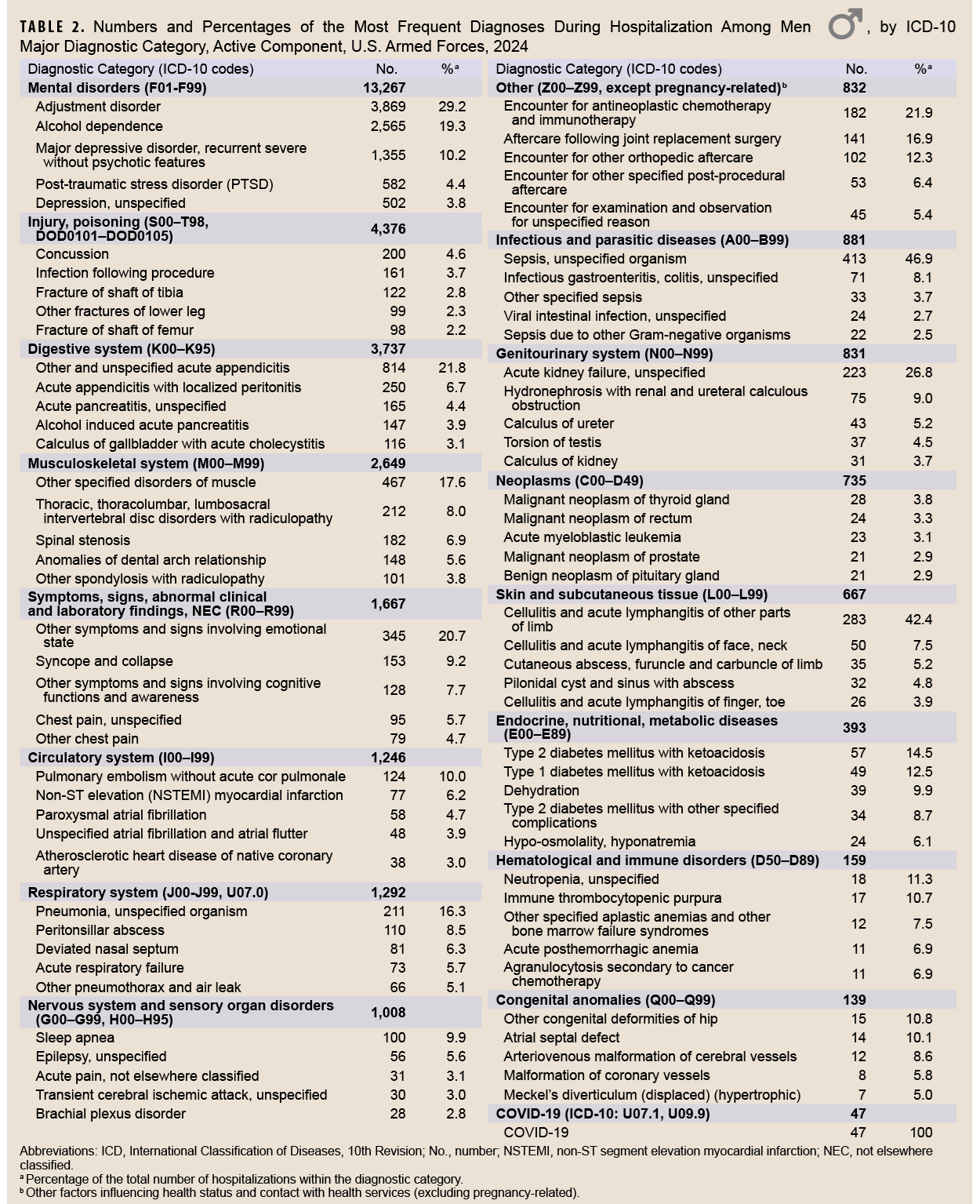
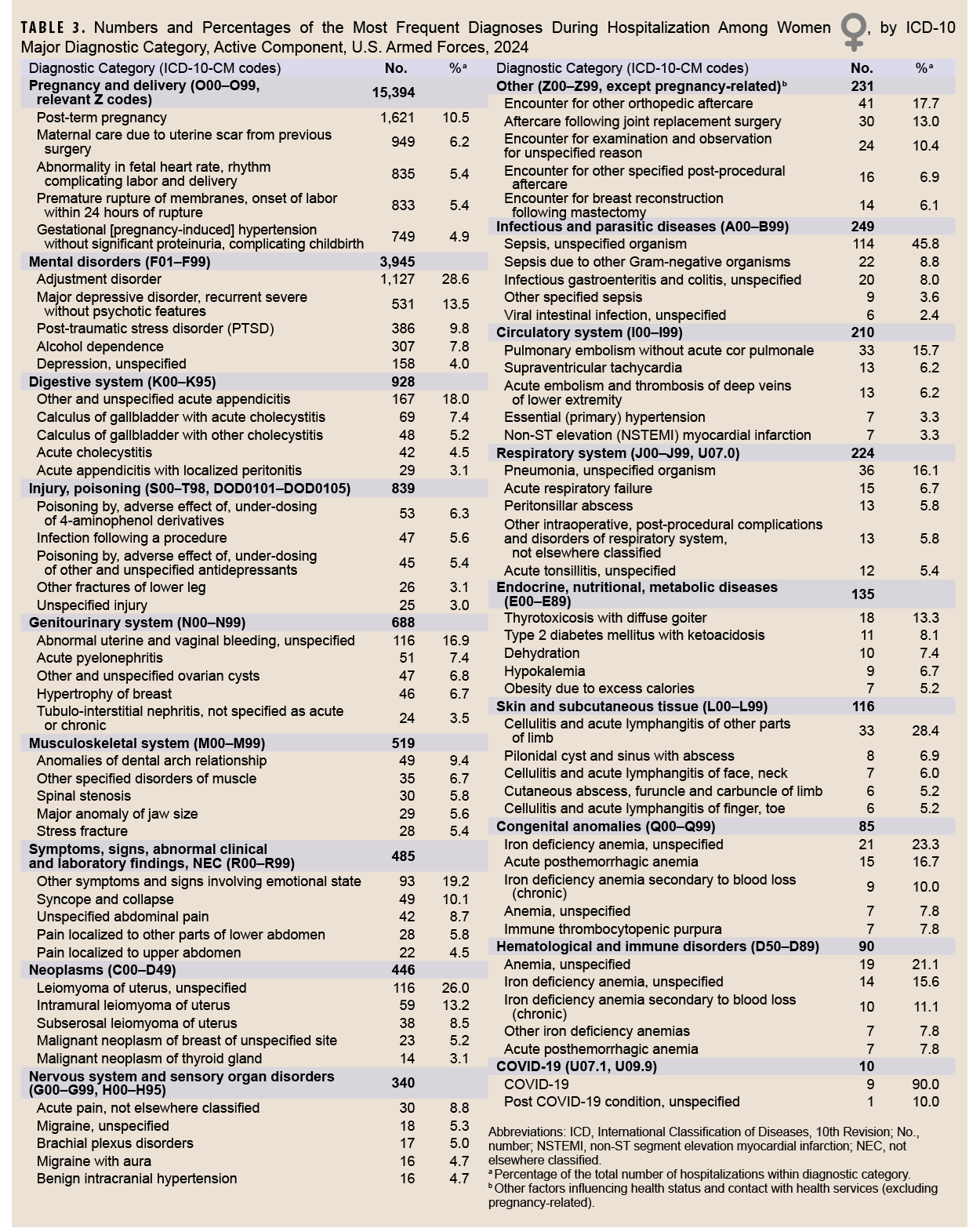
 Other common causes of hospitalization, regardless of sex, included other and unspecified acute appendicitis; sepsis, unspecified organism; and other symptoms and signs involving emotional state; as well as other specified disorders of muscle for men and abnormal uterine and vaginal bleeding for women.
Durations of hospitalizations
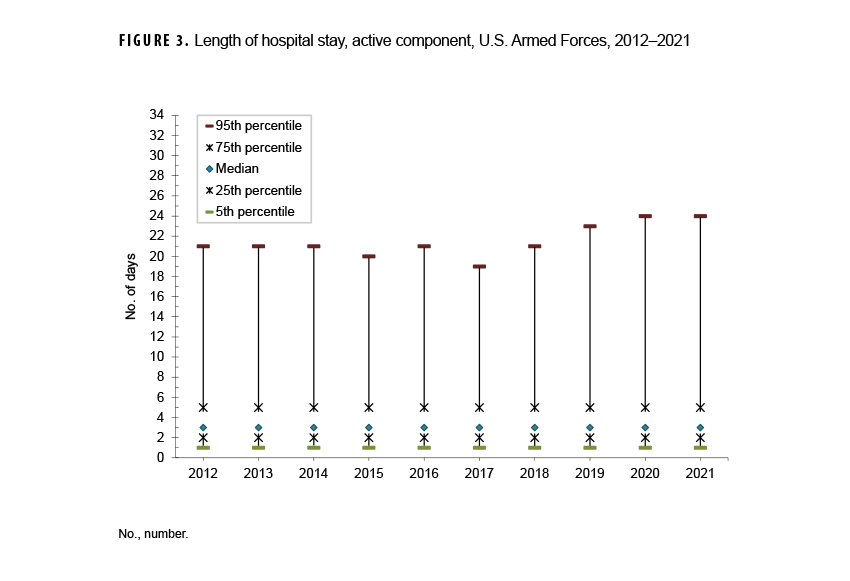
When graphically represented, hospitalization durations demonstrate a highly right-skewed (positive) distribution, with the lower limit equal to one day and a mode of three days. Because length of hospital stay is not normally distributed, the median duration with interquartile range was chosen as the best measure of central tendency. The median (IQR) duration of hospital stays (for all causes) has remained generally stable at 3 (2-5) days but increased to 4 (2-6) days in 2022 and has remained at that level (Figure 3).
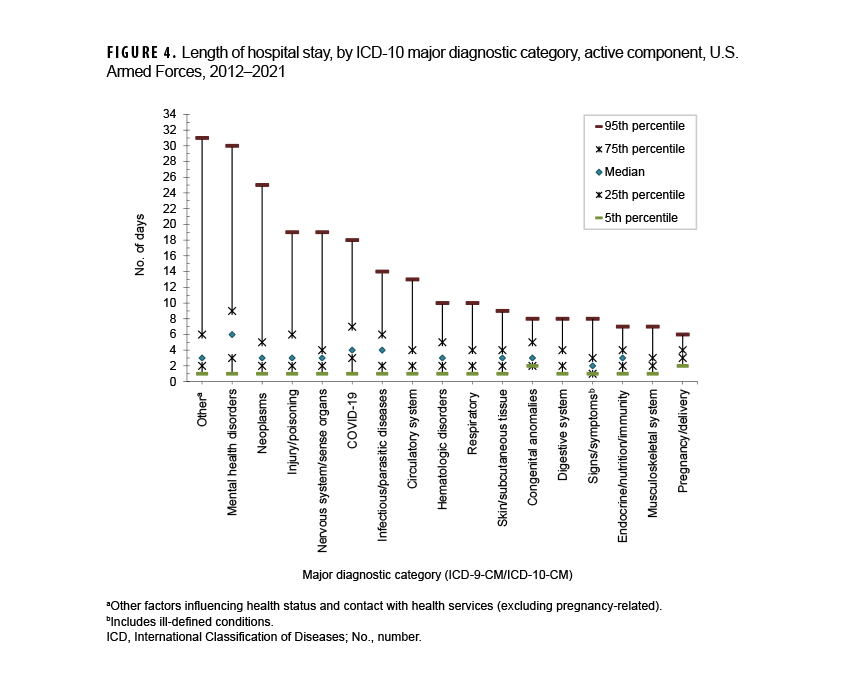
Median duration days of hospitalization varied substantially by major diagnostic category. The shortest durations of stays (median days, IQR) were observed for musculoskeletal system, genitourinary system, and digestive system hospitalizations (2 days, 2-6). The longest stays were for mental health disorder (6 days, 4-13) and ‘other’ (5 days, 3-16) hospitalizations. The remaining categories had a median of 3 (2-7) days.
Five percent of hospitalization stays exceeded 10 days for one half of ICD diagnostic categories: hematological and immune disorders (11 days), infectious and parasitic diseases (12 days), circulatory system (14 days), signs, symptoms and ill-defined conditions (22 days), nervous system and sensory organ diseases (23 days), neoplasms (24 days), injury (30 days), mental health disorders (34 days), and ‘other’ (primarily orthopedic aftercare and rehabilitation following prior illness or injury) (42 days) (Figure 4).
Hospitalizations, by service
Among active component members of the Navy, Air Force, and Space Force, pregnancy and delivery accounted for more hospitalizations than any other diagnostic category, while among ACSMs of the Army and Marine Corps, mental health disorders were the leading cause of hospitalization (Table 4). Prior to 2020, pregnancy and delivery were ranked first for both Navy and Air Force ACSMs. Among all the services, the crude hospitalization rate for mental health disorders in 2024 was highest among Army ACSMs (16.1 per 1,000 p-yrs).
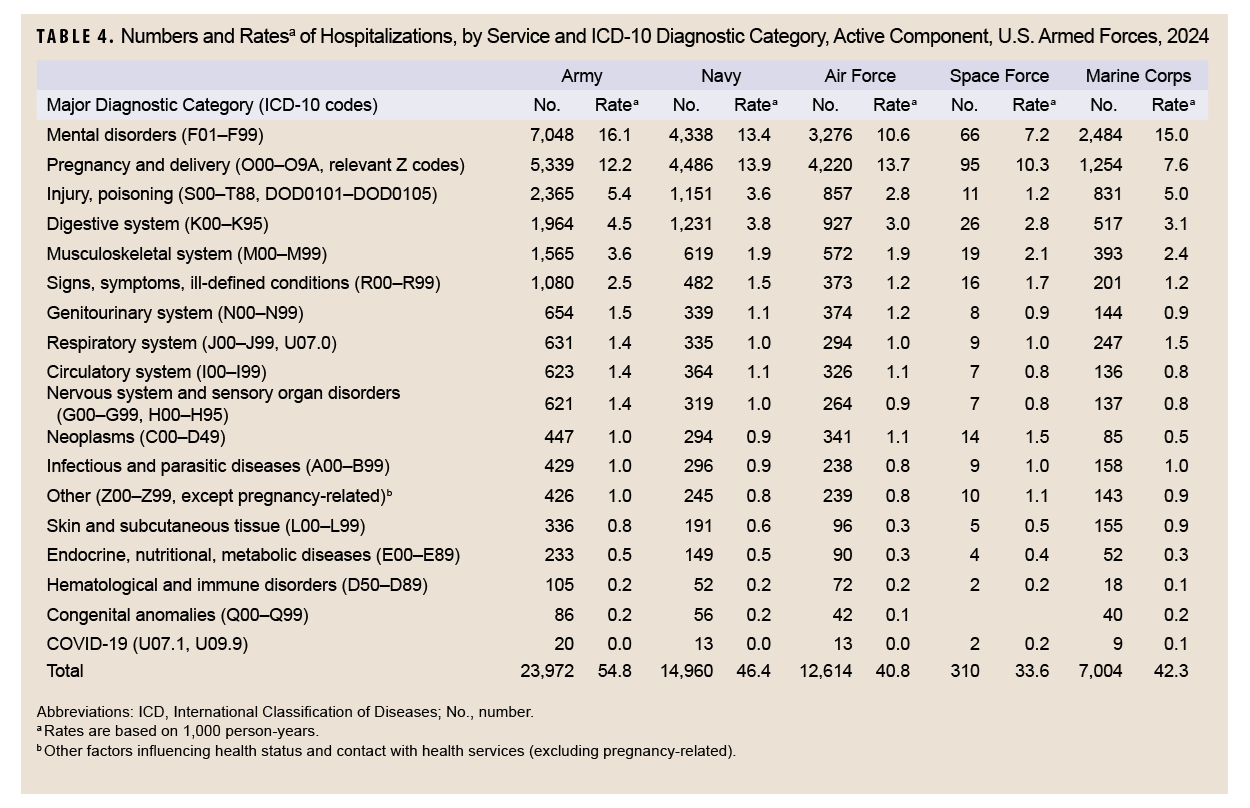
Injury was the third leading hospitalization category among Army and Marine Corps ACSMs, 5.4 per 1,000 p-yrs and 5.0 per 1,000 p-yrs, respectively. Among Navy, Air Force and Space Force ACSMs, the third highest rate of hospitalizations was for the digestive system category, at 3.8, 3.0, and 2.8 per 1,000 p-yrs, respectively.
Discussion
The 2024 crude annual hospitalization rate marks the lowest recorded level since 2015, continuing a general downward trend observed over the last 10 years. The decline appears largely driven by reductions in hospitalizations in mental health disorders, pregnancy and delivery, musculoskeletal system, and ‘other’ categories. A significant decrease in hospitalizations in 2020 coincided with COVID-19 pandemic-related changes in health care provision, while the post-pandemic period saw a dramatic drop in COVID-19 hospitalizations.
As in past years, in 2024 mental health disorders accounted for more hospitalizations than any other major diagnostic category. Within the mental health disorders category, adjustment disorders, alcohol dependence, depressive disorders, and PTSD were among the leading primary discharge diagnoses for both men and women. At the same time, modest increases were observed in both hospitalization frequencies and rates for respiratory system, infectious and parasitic diseases, and skin and subcutaneous tissue categories. Neoplasms and circulatory system categories demonstrated small absolute declines but slight rate increases, likely due to denominator (person-time) or demographic fluctuations. Although the overall hospitalization rate continued to decline in 2024, these findings indicate that the downward trend was not uniform for diagnostic categories.
Certain limitations should be considered when interpreting these results. This summary is based on primary (first-listed) discharge diagnoses only, but in many hospitalized cases, multiple conditions can be present; for example, joint pain (category, musculoskeletal) may be co-listed with an injury (category, injury). In such cases, only the first-listed discharge diagnosis would be accounted in this report. Discharge coding among multiple categories could lead to under-estimation of hospitalization rates for common conditions. Since May 2023, DMSS data have been housed and analyzed from the Military Health System Information Platform. All military treatment facilities are now using GENESIS software to electronically capture medical care. Data completeness issues related to data transfers from GENESIS to the Medical Data Store to DMSS have improved significantly. Regardless of the electronic system used to capture hospitalizations, every hospitalization record requires completion of a discharge summary before the event record is reported in the system. Consequently, timeliness of reporting can still be an issue that may lead to under-estimates of true counts and rates of hospitalizations for the most recent year of reporting. As a result, direct comparison between the 2024 data and data from prior years should be interpreted with caution.
Reference
- National Center for Health Statistics, Centers for Disease Control and Prevention. Table: people with hospital stays in the past year, by selected characteristics—United States, selected years 1997–2019. National Hospital Care Survey. U.S. Dept. of Health and Human Services. Accessed Aug. 25, 2025. https://www.cdc.gov/nchs/data/hus/2020-2021/hospstay.pdf