Abstract
This study characterized chronic insomnia disorder, utilizing data from the Defense Medical Surveillance System, to identify incident cases among U.S. active component service members from 2014 through 2023. A total of 126,733 service members met the case definition and were matched 1-to-1 with service members without chronic insomnia by sex, age, and time in service. Chronic insomnia was associated with increased probability of early separation from military service and frequently co-occurred with conditions that limit military readiness. Kaplan-Meier analysis showed diverging retention curves approximately 20 months following diagnosis, after which chronic insomnia cases had lower probability of continued active component service. A nested case-control analysis of 55,679 individuals with chronic insomnia found that early separation was associated with service branch, age, sex, race and ethnicity, marital status, rank, occupation, co-occurring diagnoses, and behavioral therapy or pharmacotherapy within 365 days of diagnosis. Behavioral therapy or pharmacotherapy within 365 days of diagnosis was more common among those who separated early. Continued attention to case surveillance, early identification, and timely evidence-based treatment may help mitigate the impacts of insomnia on service outcomes.
What are the new findings?
Service members with chronic insomnia face increased risk of early separation from service in the military. Early separation was more common among service members who had received behavioral therapy or pharmacotherapy within the first year after diagnosis. A high burden of co-occurring conditions was identified, including behavioral health disorders, traumatic brain injury, and chronic pain.
What is the impact on readiness and force health protection?
Chronic insomnia may serve as an early indicator of increased risk of separation from military service and is often concomitant with other conditions. Efforts to emphasize sleep health as a readiness factor, with a focus on improved preventive measures, in addition to early identification and timely use of evidence-based treatment, may help mitigate the impacts of insomnia on the health of the force.
Background
Chronic insomnia disorder is characterized by difficulty falling asleep, difficulty staying asleep, or early morning awakening, causing significant distress or daytime impairment, occurring 3 times or more per week for at least 3 months and not explained by another condition or inadequate sleep opportunity.1 Chronic insomnia is associated with reduced resilience, impaired functioning, and a range of negative occupational outcomes.2-4 As many as one half of U.S. adults experience symptoms of insomnia, and the estimated prevalence of chronic insomnia disorder ranges 5–23%.5-8 Military service members are at increased risk due to occupational factors such as operational stress, irregular work schedules, and deployments.2,3
A recent surveillance report identified over 148,000 active component service members (ACSMs) with incident chronic insomnia disorder from 2012 through 2021.3 Observed rate differences suggested a disproportionate burden by branch of service, sex, age, and race and ethnicity, with higher rates among Army members, women, older service members, and non-Hispanic Black service members.3
Chronic insomnia may also affect military readiness because of its relationship with behavioral health disorders and neurological conditions, which are major contributors to disability evaluation and retention outcomes.9,10 Sleep disorders frequently coexist with behavioral health disorders and neurological conditions; evidence suggests these relationships are often interrelated, with conditions mutually exacerbating each other.3,5,6,8 Initial Physical Evaluation Board (PEB) evaluations serve as the proxy for retention medical standards, and data from fiscal year 2023 consistently emphasized high involvement of both behavioral health and neurological conditions.9,10 Specifically, behavioral health conditions alone were involved in 35–47% of initial PEB evaluations among all service branches, while neurological conditions were involved in 20–26%.9,10 Among those referred for disability evaluation, over 40% of unfitting diagnoses involved mental health or neurological disorders.10 While insomnia was not listed as a primary condition, it is frequently comorbid with other mental health diagnoses and cited as a potential contributing factor to overall impairment and unfit determinations.3,10
Effective, evidence-based treatments for chronic insomnia are available.6,11 Cognitive behavioral therapy for insomnia (CBT-I) is the primary intervention recommended in both military and civilian clinical practice guidelines (CPGs).5,6,11 Short-term pharmacotherapy may be used selectively, but is not recommended as a primary or long-term strategy.6,11
Although chronic insomnia is associated with impaired functioning and adverse occupational outcomes, less is known about its relationship with military-specific outcomes, including continued service and early separation. This report addresses 2 specific questions: 1) Do service members diagnosed with chronic insomnia have shorter lengths of active component service following diagnosis compared to matched peers without insomnia? and 2) Among those diagnosed with chronic insomnia, what demographic, medical, or treatment factors are associated with completing service versus separating early for medical or negative administrative reasons?
Methods
Data source and chronic insomnia case definition
The Defense Medical Surveillance System (DMSS) was utilized to identify insomnia diagnoses using International Classification of Diseases, 9th and 10th revisions (ICD-9/ICD-10), with an incident case defined as having at least 2 inpatient or outpatient medical encounters in any diagnostic position, separated by 90–390 days.3,7 The first qualifying encounter was used as the date of diagnosis. The surveillance period was January 1, 2014 through December 31, 2023 and included all individuals serving in the active component of the U.S. Army, Navy, Air Force, Space Force, or Marine Corps. Exclusion criteria included National Guard, reserve, and Coast Guard personnel, and individuals with an insomnia diagnosis prior to the study period. This study was conducted as part of the Armed Forces Health Surveillance Division’s routine public health surveillance mission.
Matched cohort analysis
To assess the association between chronic insomnia and separation from service, ACSMs with chronic insomnia, who were required to be in military service at the time of the case diagnosis, were matched 1-to-1 to an unexposed matched cohort of ACSMs without any insomnia diagnoses during their military careers. Additional matching criteria included sex, age (±365 days), and cumulative time in service (±365 days) as of the case’s insomnia diagnosis. Branch of service was not included as a matching variable to avoid overly restrictive matching and potential loss of eligible matched pairs; sensitivity testing confirmed that matching by service branch did not significantly alter the survival curve. Members of the unexposed matched cohort were assigned the same index date as their corresponding chronic insomnia cases.
The primary outcome was separation from active component military service for any reason. The Kaplan–Meier survival method was used to estimate the probability of remaining in active service over time among chronic insomnia cases and the unexposed matched cohort. The log-rank test was used to evaluate whether there was a statistically significant difference between the survival curves. Demographic and occupational variables were assessed as of the index date.
Nested case-control analysis
A nested case-control analysis was conducted among ACSMs with chronic insomnia who separated from active component service during the study period. The objective was to evaluate whether treatment factors, common mental health and neurological comorbidities, or demographics were associated with completing a term of service versus separating early for medical or negative administrative reasons.
Eligible individuals were ACSMs who met the case definition for chronic insomnia during the surveillance period. Individuals had to remain in continuous active service for at least 1 year following diagnosis. This criterion ensured enough follow-up time to evaluate medical care and co-occurring diagnoses that occurred prior to separation. Separation records were reviewed to classify outcomes based on Interservice Separation Codes (ISCs), which are assigned at the time of discharge and documented on the official record of separation from military service, the Certificate of Release or Discharge from Active Duty, or DD214.
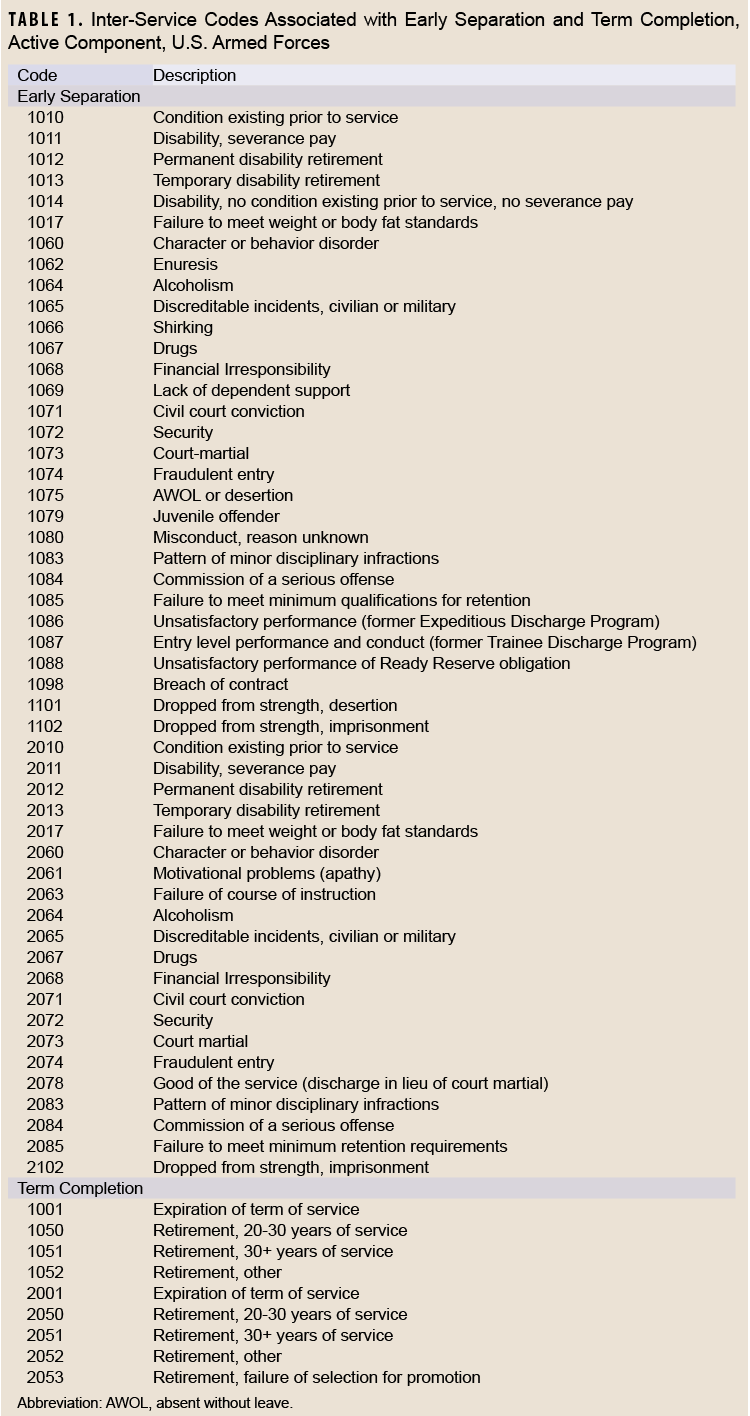
In the nested case-control analysis, cases were individuals with chronic insomnia who experienced “early separation,” defined as separation due to medical disability or negative administrative reasons prior to completion of service obligation. The comparison group consisted of ‘term-completion controls’, defined as individuals with chronic insomnia who completed their obligated terms of service. The ISCs used to classify early separation and term completion are listed in Table 1.
Treatment exposure and co-occurring diagnoses
Treatment exposure was defined as receipt of CPG-concordant insomnia care within 365 days of diagnosis. Behavioral therapy (BT) was identified using outpatient medical encounters that included both an insomnia diagnosis and qualifying Current Procedural Terminology (CPT) codes for psychotherapy, as described by Hsu et al.3 Because administrative data do not confirm the specific psychotherapy content delivered, BT exposure was categorized as: no therapy, brief therapy (defined as 1–3 sessions), and full CBT-I (defined as ≥4 sessions). Pharmacotherapy (PT) was defined by the presence of a prescription for CPG-recommended medications.6 Timing of treatment initiation (within 90 days vs. later or no treatment) was also assessed.
Covariates included demographic and military characteristics, as well as co-occurring diagnoses for anxiety, depression, post-traumatic stress disorder (PTSD), bipolar disorder, substance use disorders, adjustment disorder, traumatic brain injury (TBI), and chronic pain, captured from inpatient or outpatient records within ±365 days of the insomnia diagnosis. Mental health conditions were identified using ICD-9/ICD-10 code sets consistent with the methodology employed in the MSMR update on mental health disorders; TBI was identified using codes specified by the Armed Forces Health Surveillance Division surveillance case definition.12,13 Chronic pain was identified using ICD-9 code 338.2 and ICD-10 codes G89.29 and G89.4.
Statistical analysis
Descriptive statistics were used to compare treatment patterns and comorbidities for types of separation. A multivariable logistic regression model was used to obtain adjusted odds ratios (aORs) for early separation. The final model included branch of service, sex, age, race and ethnicity, marital status, rank, occupation, alcohol or substance use disorder, TBI, chronic pain, anxiety, depressive disorder, adjustment disorder, PTSD, bipolar disorder, and receipt of any CPG-concordant therapy within 365 days.
Results
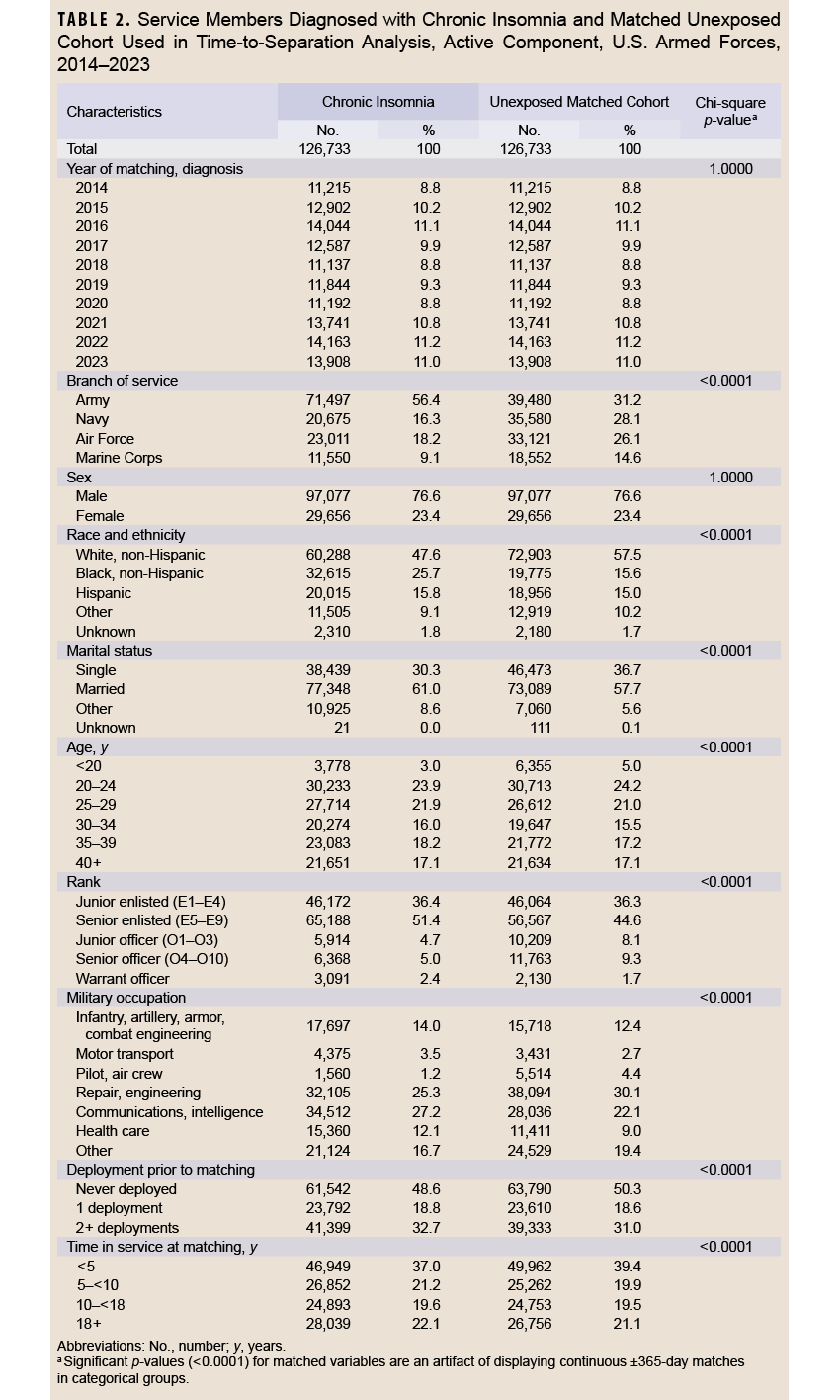
A total of 126,751 ACSMs met the surveillance case definition for chronic insomnia. A total of 18 chronic insomnia cases were excluded because no matched service member was identified within 1 year of cumulative time in service. Total cases by year, as well as baseline demographic and military characteristics, are shown in Table 2. The largest demographic groups were Army soldiers, men, non-Hispanic White individuals, senior enlisted service members, those never deployed, those with less than 5 years of service at diagnosis, and those in communications or intelligence and repair or engineering occupations.
Time-to-separation analysis
Matched survival analysis was conducted using 126,733 chronic insomnia cases and an equal number of matched service members in the matched unexposed cohort. Time to separation was tracked beginning at the index insomnia diagnosis for cases and the corresponding match date for matched service members without chronic insomnia.
The Kaplan-Meier survival curves (Figure) display descriptive estimates of the probability of retention over time. The curves differed significantly between chronic insomnia cases and the matched unexposed cohort (p<0.01). The curves cross between 19 and 20 months, after which service members with chronic insomnia had a lower estimated probability of continued active duty service. By 24 months after index diagnosis, 45.6% of chronic insomnia cases remained on active duty compared to 48.5% of the matched unexposed cohort. At 24, 48, and 100 months after the index date, retention rates were 45.6%, 26.5%, and 12.3%, respectively, among chronic insomnia cases, compared with 48.5%, 32.8%, and 19.1% in the matched unexposed cohort.
Demographic, medical and treatment factors association with separation
The nested case-control analysis included 55,679 service members with chronic insomnia who separated from active duty during the surveillance period. Of these, 29,282 experienced early separation and 26,397 were term-completion controls (Table 3).
The Army constituted the largest share of the study population and had the highest proportion of early separations, evidencing differences in separation outcomes among the service branches. Separation outcomes by demographic subgroup showed variations in the proportions of early separation versus term completion in relation to sex, race and ethnicity, marital status, age, rank, occupation, deployment history, and time in service. Service members with 1 or more prior deployments had lower unadjusted odds of early separation than those who had never deployed. Service members with 18 or more years of service at diagnosis had a substantially higher proportion of term completion. Within occupational categories, motor transport had higher unadjusted odds of early separation compared with the infantry, artillery, armor, combat engineering category, while pilot and air crew, repair and engineering, communications and intelligence, health care, and other occupations had lower unadjusted odds.
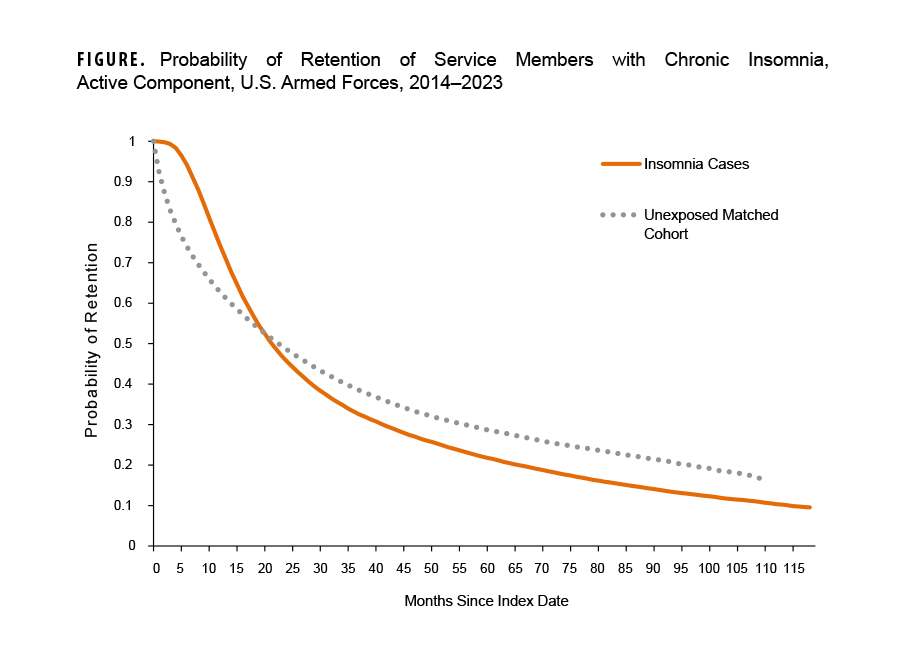
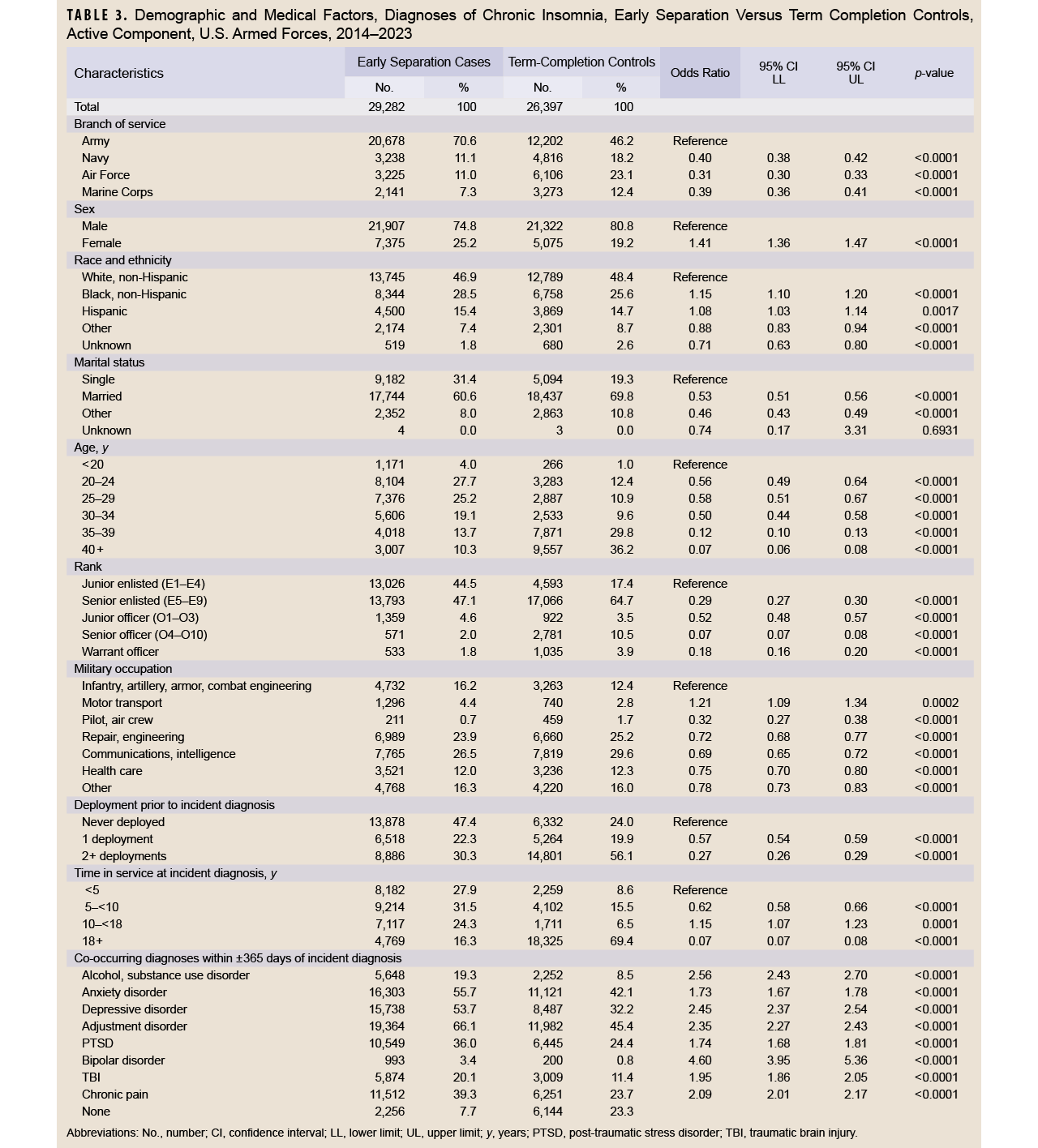
Table 3 also shows early separation and term completion outcomes by co-occurring diagnoses. The diagnoses were not mutually exclusive. As a descriptive summary of the co-occurring diagnosis burden, individuals were classified as having at least 1 listed co-occurring diagnosis if they had any of the selected diagnoses included in Table 3 within ±365 days of a chronic insomnia diagnosis. Of the 55,679 individuals included in the nested case-control study, only 8,400 (15.1%) had no listed cooccurring diagnoses.
Table 4 lists insomnia treatments received by individuals within 365 days of initial diagnosis, highlighting differences between the early separation and term completion groups, including receipt of behavioral therapy (categorized as ‘no therapy’, ‘brief therapy with 1–3 encounters’, or ‘full CBT-I with 4+ encounters’) and receipt of any CPG-concordant pharmacotherapy. A greater proportion of early separation cases received behavioral therapy or CPG-concordant pharmacotherapy within 365 days of diagnosis.
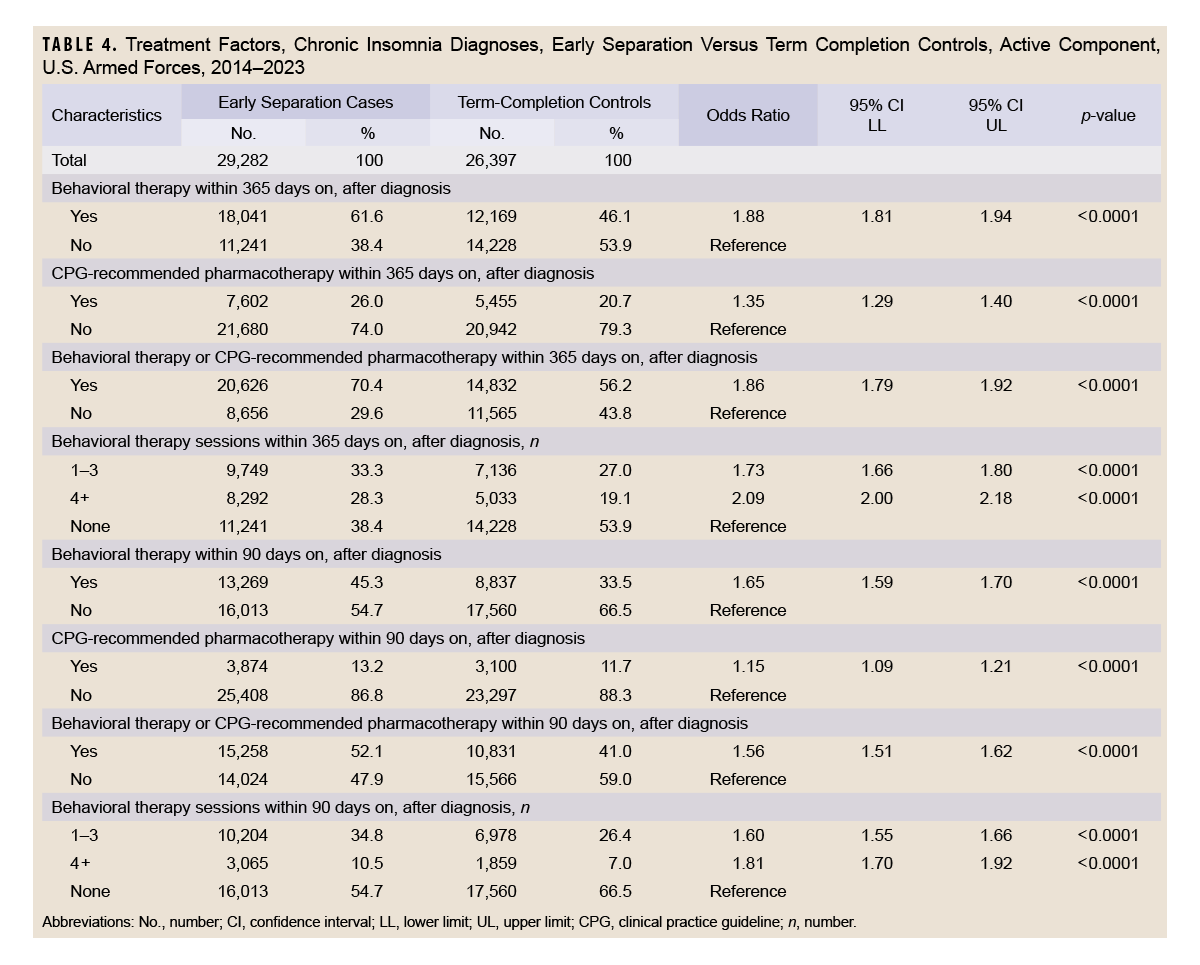
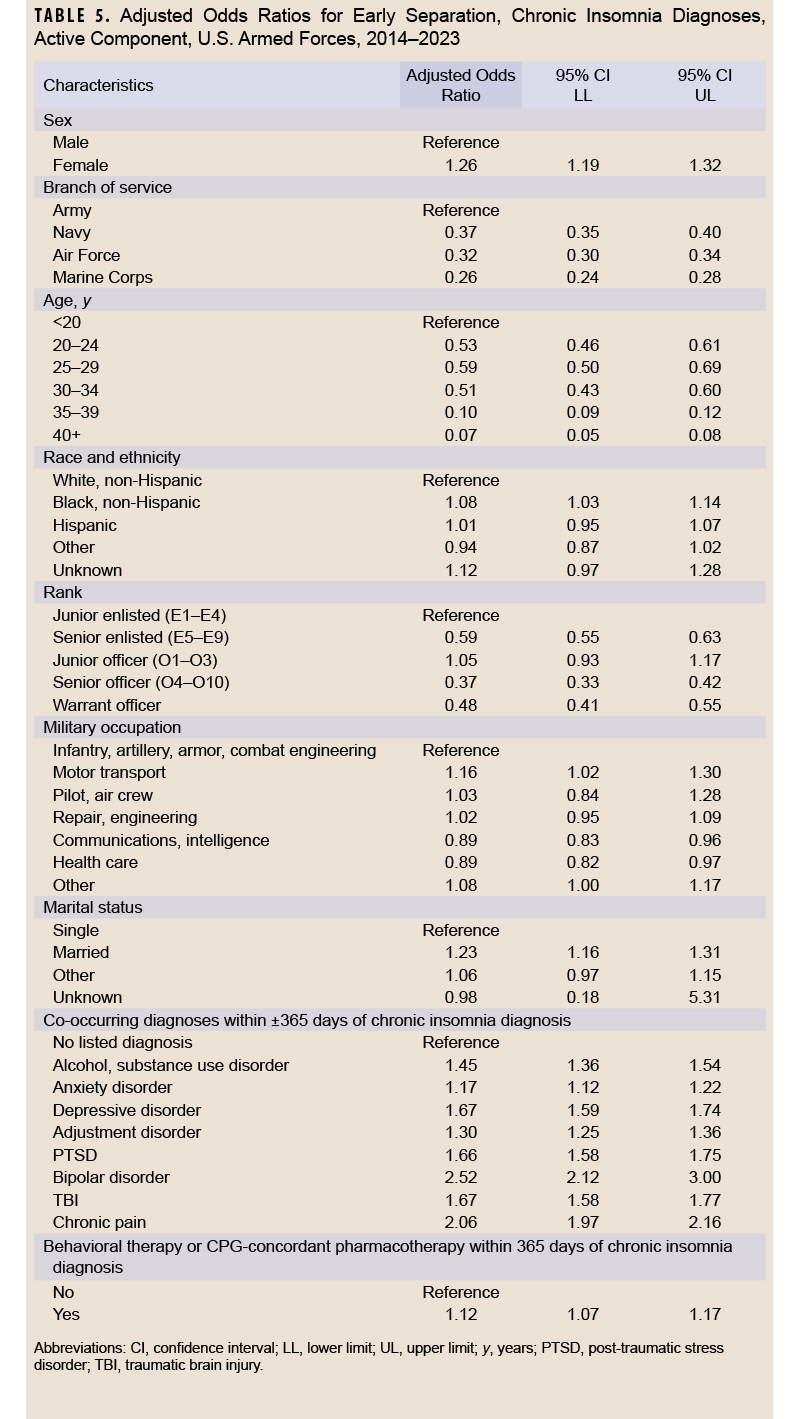 Table 5 details the aORs for early separation. Compared with the Army, odds of early separation were significantly lower for Navy (aOR 0.37), Air Force (aOR 0.32), and Marine Corps (aOR 0.26) personnel. Female sex was associated with higher adjusted odds of early separation compared with male sex (aOR 1.26). Older age groups had lower adjusted odds of early separation compared with service members younger than age 20 years. Adjusted odds of early separation were higher among junior personnel than among senior enlisted personnel, senior officers, and warrant officers. Among the occupational categories, motor transport was associated with higher adjusted odds of early separation compared with the infantry, artillery, armor, combat engineering category (aOR 1.16), while communications and intelligence (aOR 0.89) and health care (aOR 0.89) had lower adjusted odds. Receipt of behavioral therapy or pharmacotherapy within 365 days of diagnosis was associated with higher adjusted odds of early separation (aOR 1.12). All listed co-occurring diagnoses were associated with increased odds of early separation.
Discussion
Service members diagnosed with chronic insomnia demonstrated a reduced probability of continued active component service after 20 months compared with the matched unexposed cohort, with this difference sustained through the remainder of the surveillance period. The survival curve is likely influenced by the case definition, which required 2 insomnia-related encounters 90–390 days apart. This introduced a survivorship period of 3–13 months, during which, unlike individuals in the matched unexposed cohort, cases had to remain in service to be included. As a result, retention initially appeared higher among cases, but once that period ended, the curves converged and then crossed, indicating an overall higher probability of separation among those with chronic insomnia.
The nested case-control analysis highlights several key patterns. Consistent with prior surveillance findings showing service-specific differences in chronic insomnia burden, Army members accounted for the largest number of chronic insomnia cases.3 In this study, service members in the Navy, Air Force, and Marine Corps had lower adjusted odds of early separation compared with Army members. The reasons for these service-specific differences could not be determined from this analysis.
In the nested case-control analysis, early separation among ACSMs with chronic insomnia was associated with younger age, female sex, non-Hispanic Black race or ethnicity, current marriage, and motor transport occupation. Older age groups had lower adjusted odds of early separation compared with service members younger than 20 years, and senior enlisted personnel, senior officers, and warrant officers had lower adjusted odds compared with junior enlisted personnel. The associations with younger age and lower rank are expected within the context of this analysis, as these individuals are inherently less likely to reach retirement eligibility. Observed differences in chronic insomnia burden and associated separation risk by sex, race and ethnicity, and marital status are consistent, however, with findings from longitudinal military cohorts, such as the Millennium Cohort Study, and military surveillance reports.2,4 These differences may reflect underlying social or structural factors, including unequal access to support resources, potential bias in administrative separation processes, or differences in exposure to occupational stressors.3,6,7 Prior studies have identified differences by sex and race/ethnicity in chronic insomnia burden among service members and sociodemographic variation in insomnia-related care among veterans, supporting the need for further study of potential disparities in military populations.3,7 These findings emphasize the need for further investigation into potential disparities in separation outcomes among demographic subgroups.
It is difficult to isolate a direct relationship between chronic insomnia and separation from service, in part, due to the high prevalence of co-occurring conditions. In this study, nearly 85% of individuals with chronic insomnia had at least 1 co-occurring diagnosis selected for analysis: anxiety, depression, PTSD, bipolar disorder, substance use disorders, adjustment disorder, TBI, or chronic pain. The relationships between chronic insomnia and those co-occurring diagnoses are often interrelated, with insomnia potentially both a cause and a consequence.5,6 Furthermore, these highly comorbid conditions, or the treatments used for their management (e.g., antipsychotics, benzodiazepines, hypnotics, intensive therapy), may render a service member non-deployable or unfit for duty, thereby mandating a Medical Evaluation Board (MEB) and subsequent PEB determination.6,9,10 This required medical review directly factors into the odds ratios for early separation, as the PEB outcome serves as a proxy for service retention medical standards.9,10 As such, insomnia may serve as a marker of underlying risk rather than a primary driver of separation. Future research should aim to link clinical diagnoses, including symptom severity, to documented reasons for separation.
Lastly, receipt of behavioral therapy or CPG-concordant pharmacotherapy within 365 days of chronic insomnia diagnosis was associated with higher adjusted odds of early separation (aOR 1.12). This should not be interpreted as evidence that treatment increased separation risk. Rather, treatment may have served as a proxy for greater symptom severity, persistence, functional impairment, or clinical recognition. Administrative data could not capture treatment fidelity, completion, symptom response, or duty-related functional outcomes. Prior research among active duty personnel suggests that CBT-I can improve insomnia symptoms, although clinically meaningful improvement may occur in only a subset of treated service members.14 Future studies should evaluate whether timely, complete, and high-fidelity insomnia treatment improves functional outcomes and reduces early separation risk.
This study has several important limitations. It lacked clinical information on insomnia severity, symptom burden, functional impairment, and treatment response, which limits interpretation of clinical impact and its association with early separation. Specific medical conditions responsible for separation were also not available, meaning that some separations may have been driven by conditions unrelated to insomnia. Additionally, this analysis did not distinguish between medical and negative administrative separations, which likely involve different contributing factors. The case definition required 2 insomnia diagnoses 90–390 days apart, potentially excluding milder or short-term cases and skewing the sample toward more severe, persistent, or treatment-resistant insomnia. The reliance on administrative data from DMSS may not adequately capture self-managed cases and may reflect potential variability in clinical coding practices. Behavioral therapy exposure was also identified using diagnosis and CPT codes, which did not confirm whether CBT-I-specific components were delivered, whether treatment was completed, or whether symptoms improved. Similarly, ISCs are applied administratively and may not fully capture the complexity of discharge circumstances; their use may vary among service branches or over time, introducing potential bias into comparisons between early separation and term completion.
Despite these limitations, the findings offer important insights into the relationship between chronic insomnia and service outcomes. Chronic insomnia was associated with an increased probability of early separation and frequently co-occurred with behavioral health and neurological conditions. Although it may not be the primary cause of separation, insomnia may serve as a marker of broader risk, particularly when present with other comorbidities. Efforts to improve early identification, intervention, and adherence to clinical practice guidelines may help mitigate the impacts of insomnia on force health. Future studies and surveillance efforts would benefit from incorporating broader case definitions, assessing clinical severity, evaluating the impact of evidence-based insomnia therapies on separation outcomes, and prospectively linking clinical diagnoses to specific reasons for separation from military service. Enhanced surveillance and greater policy attention to sleep health may support force readiness and long-term retention.
References
- American Academy of Sleep Medicine. International Classification of Sleep Disorders. 3rd ed, text revision. American Academy of Sleep Medicine;2014. Accessed Jul. 23, 2026. https://aasm.org/clinical-resources/international-classification-sleep-disorders
- Seelig AD, Jacobson IG, Donoho CJ, et al. Sleep and health resilience metrics in a large military cohort. Sleep. 2016;39(5):1111-1120. doi:10.5665/sleep.5766
- Hsu NM, Stahlman SL, Fan MT, Wells NY. Incidence and management of chronic insomnia, active component, U.S. Armed Forces, 2012 to 2021. MSMR. 2023;30(1):2-11. Accessed Jul. 23, 2026. https://www.health.mil/reference-center/reports/2023/01/01/medical-surveillance-monthly-report-volume-30-number-1
- Markwald RR, Carey FR, Kolaja CA, et al. Prevalence and predictors of insomnia and sleep medication use in a large tri-service US military sample. Sleep Health. 2021;7(6):675-682. doi:10.1016/j.sleh.2021.08.002
- Edinger JD, Arnedt JT, Bertisch SM, et al. Behavioral and psychological treatments for chronic insomnia disorder in adults: an American Academy of Sleep Medicine clinical practice guideline. J Clin Sleep Med. 2021;17(2):255-262. doi:10.5664/jcsm.8986
- U.S. Department of Veterans Affairs, U.S. Department of Defense. VA/DOD Clinical Practice Guideline for the Management of Chronic Insomnia Disorder and Obstructive Sleep Apnea. Management of Chronic Insomnia Disorder and Obstructive Sleep Apnea Work Group, U.S. Dept. of Veterans Affairs, U.S. Dept. of War. Updated Jan. 2025. Accessed Jul. 23, 2026. https://www.healthquality.va.gov/healthquality/guidelines/cd/insomnia/i-osacpg_2025-guideline_final_20250915.pdf
- Bramoweth AD, Tighe CA, Berlin GS. Insomnia and insomnia-related care in the Department of Veterans Affairs: an electronic health record analysis. Int J Environ Res Public Health. 2021;18(16):8573. doi:10.3390/ijerph18168573
- Hafner M, Romanelli RJ, Yerushalmi E, Troxel WM. The Societal and Economic Burden of Insomnia in Adults: An International Study. RAND Corporation. Mar. 16, 2023. Accessed Jul. 23, 2026. https://www.rand.org/pubs/research_reports/RRA2166-1.html
- Walter Reed Army Institute of Research. Retention Medical Standards Analytics and Research (RMSAR) 2024 Annual Report. Dept. of the Army, U.S. Dept. of War. Updated Feb. 28, 2025. Accessed Jul. 23, 2026. https://wrair.health.mil/portals/87/fy24%20rmsar%20annual%20report%20final_1_1.pdf
- Walter Reed Army Institute of Research. Disability Evaluation System Analytics and Research (DESAR) FY 2024 Annual Report. Dept. of the Army, U.S. Dept. of War. Updated May 14, 2025. Accessed Jul. 23, 2026. https://wrair.health.mil/portals/87/fy2024%20desar%20annual%20report_v5_final_1.pdf
- Edinger JD, Arnedt JT, Bertisch SM, et al. Behavioral and psychological treatments for chronic insomnia disorder in adults: an American Academy of Sleep Medicine systematic review, meta-analysis, and GRADE assessment. J Clin Sleep Med. 2021;17(2):263-298. doi:10.5664/jcsm.8988
- Armed Forces Health Surveillance Division. Diagnoses of mental health disorders among active component U.S. Armed Forces, 2019–2023. MSMR. 2024;31(12):2-11. Accessed Jul. 23, 2026. https://www.health.mil/news/articles/2024/12/01/msmr-mental-health-update-2024
- Armed Forces Health Surveillance Division. Traumatic Brain Injury (TBI): DoD Standard Surveillance Case Definition for TBI Adapted for AFHSB Use. Defense Health Agency, U.S. Dept. of War. Jan. 2019. Updated Jun. 2026. Accessed Jun. 30, 2026. https://www.health.mil/reference-center/publications/2026/06/01/traumatic-brain-injury
- Lee MRG, Breitstein J, Hoyt T, et al. Cognitive behavioral therapy for insomnia among active duty military personnel. Psychol Serv. 2021;18(1):42-50. doi:10.1037/ser0000340
Author Affiliations
Uniformed Services University of the Health Sciences, Bethesda, MD: Lt Col Rupert; Epidemiology and Analysis Branch, Armed Forces Health Surveillance Division, Public Health Directorate, Defense Health Agency, Silver Spring, MD: Dr. Stahlman, LCDR Baker Miller, Dr. Fan; Immunization Healthcare Division, Public Health Directorate, Defense Health Agency, Falls Church, VA: Lt Col Hsu
Disclaimer
The views expressed in this report reflect the results of research conducted by the authors and do not necessarily reflect official policy nor position of the Defense Health Agency, Department of War, or the U.S. Government.