What are the new findings?
In 2024, injuries, mental health disorders, and musculoskeletal diseases were the categories of medical conditions associated with the most medical encounters, greatest numbers of members affected, and largest numbers of hospital days among active duty Coast Guard members, similar to Department of Defense active component service members. When compared to 2023, medical encounters rose by 6.2%, hospital bed days increased by 13.7%, and major category conditions increased by 5.7%. In 2024, COVID-19 accounted for 0.3% of total medical encounters, a decrease from 0.4% in 2023, and 0.2% of hospital bed days reported in 2024.
What is the impact on readiness and force health protection?
The major condition categories in this report present health challenges for members of the U.S. Coast Guard and affect their service readiness. Loss of duty availability related to illness and injury diminishes Coast Guard personnel readiness. Coast Guard members have unique occupational exposures that may benefit from specific risk reduction programs to mitigate these threats.
Background
The U.S. Coast Guard is a military service that operates under the authority of the U.S. Department of Homeland Security, providing law and maritime safety enforcement, marine and environmental protection, and military naval support.1,2 It is the second smallest service of the U.S. Armed Forces, with approximately 45,940 active component service members, and the only military service operating outside the authority of the Department of Defense. Coast Guard personnel are eligible to use DOD health care facilities, but because many service members are not stationed near a DOD installation, the Coast Guard operates primary care clinics in areas with sufficiently large Coast Guard populations, which is limited to providing primary care.1
Recent research indicates that Coast Guard beneficiaries (i.e., active duty service members, reservists entitled to specific care, retirees, dependents) face challenges obtaining care meeting access standards due to several factors, including staffing shortages at Coast Guard clinics, data gaps, a lack of information to ensure member assignments optimally address the health needs of dependents, and more.1 A higher proportion of civilian hospitalizations among Coast Guard members has been noted3; this difference may extend to ambulatory care as well. The MSMR annual morbidity burden report excluded hospitalization data for the U.S. Coast Guard service members from 2016 through 2021 due to missing data.3,4
To quantify the impacts of various illnesses and injuries among members of the active component of the U.S. Coast Guard in 2024, this summary report employs the same disease classification system and morbidity burden measures that were used in the general active component burden analysis.
Methods
The population for this analysis included all individuals who served in the active component of the Coast Guard at any time during the surveillance period of January 1, 2024 through November 30, 2024. The methodology for summarizing absolute and relative Coast Guard morbidity burdens in 2024 is identical to the methodology described on page 5 of this issue that determined the absolute and relative burdens attributed to various illnesses and injuries among the active component of the U.S. Armed Forces.
Results
In 2024, a total of 36,686 Coast Guard service members had 470,239 total medical encounters, which included 10,143 hospital bed days reported, for a rate of 0.28 hospital bed days per Coast Guard member who experienced at least 1 medical encounter, either ambulatory or hospitalization.
Morbidity burden, by category
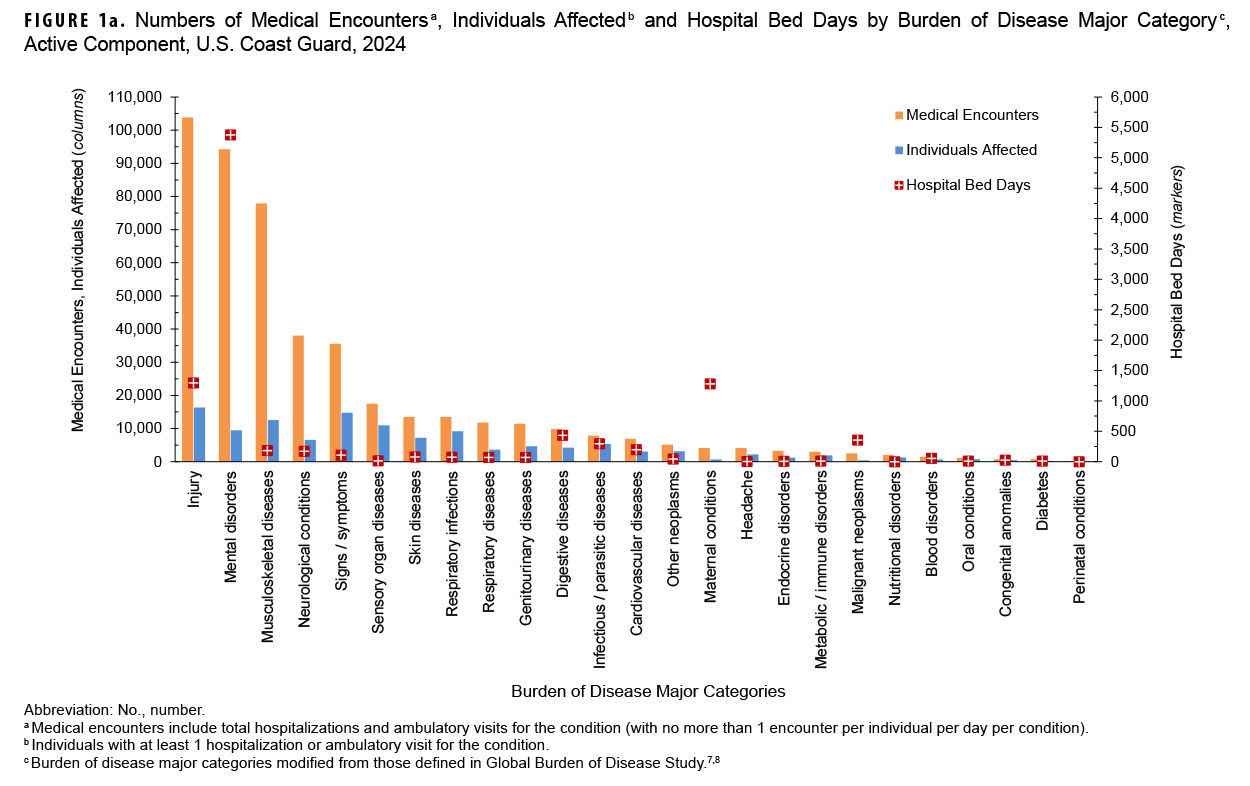 In 2024, more active component Coast Guard members experienced medical encounters for injury (n=16,297) than any other morbidity-related category (Figure 1a). Second-most frequent in terms of hospital bed days, injury accounted for over one-fifth (22.1%) of all medical encounters (Figure 1b).
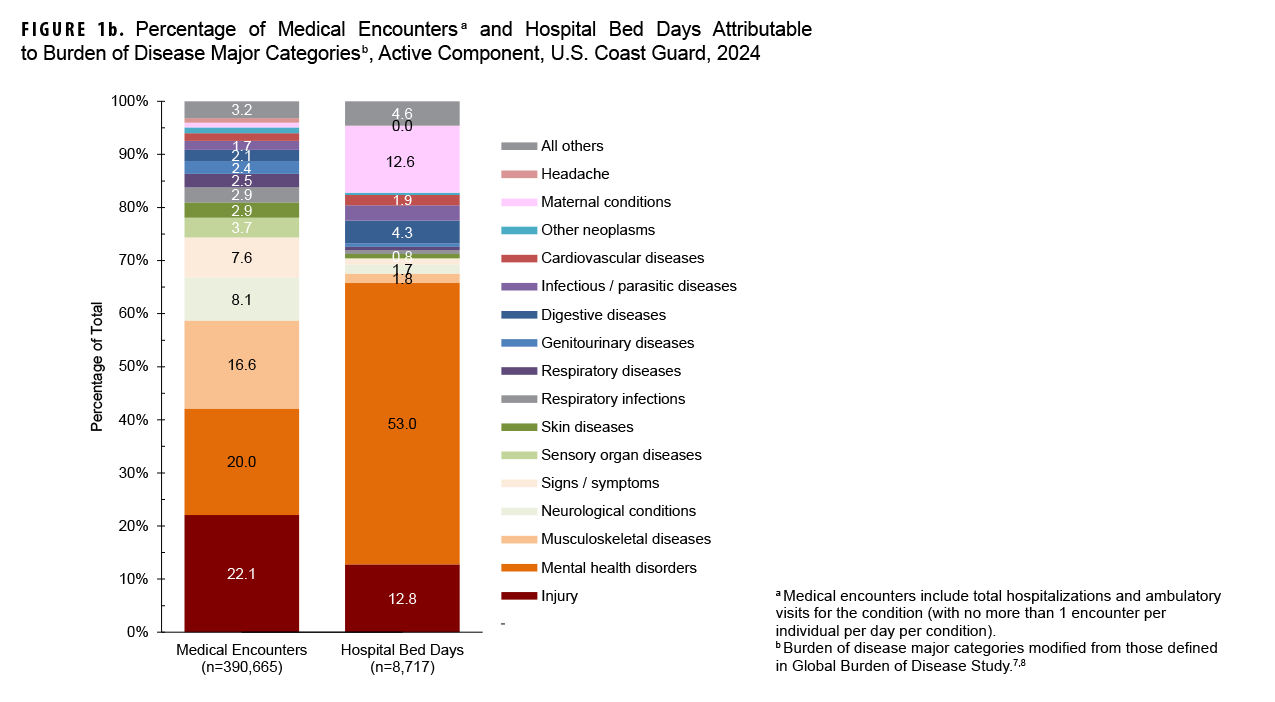
Mental health disorders accounted for more hospital bed days (n=5,376) than any other morbidity-related category, constituting over half (53.0%) of all hospital bed days, and fifth in terms of numbers of individuals affected (Figures 1a, 1b). Combined, injury and mental health disorders accounted for over three-fifths (65.8%) of all hospital bed days and more than two-fifths (42.1%) of all medical encounters.
Maternal conditions (pregnancy complications, delivery), accounted for a relatively large proportion of all hospital bed days (n=1,280, 12.6%) but a much smaller proportion of total medical encounters (n=4,094 0.9%) (Figures 1a, 1b). Maternal conditions were the most prevalent medical condition among female active component Coast Guard members. Women comprised approximately one-sixth (16.4%) of the active duty Coast Guard in 2024.
Medical encounters, by condition
In 2024, 5 disease-related conditions accounted for more than one-third (37.3%) of all illness- and injury-related medical encounters among active component Coast Guard members: other back problems (includes lower back pain, other dorsalgia), anxiety disorders, organic sleep disorders (e.g., obstructive sleep apnea, insomnia), arm/shoulder injuries, and knee injuries (Figure 2). Moreover, the 10 conditions associated with the most medical encounters constituted more than half (58.0%) of all illness- and injury-related medical encounters.
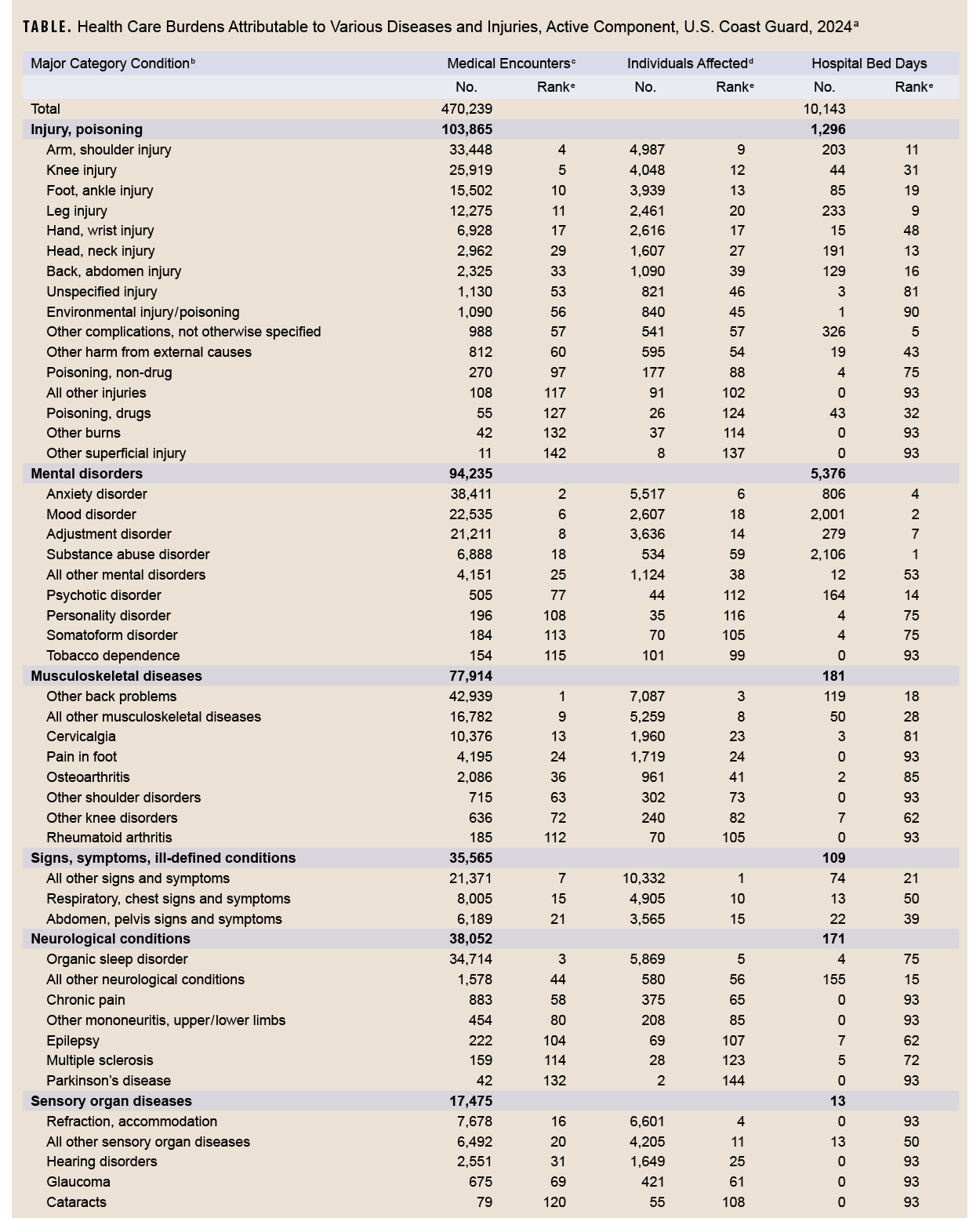
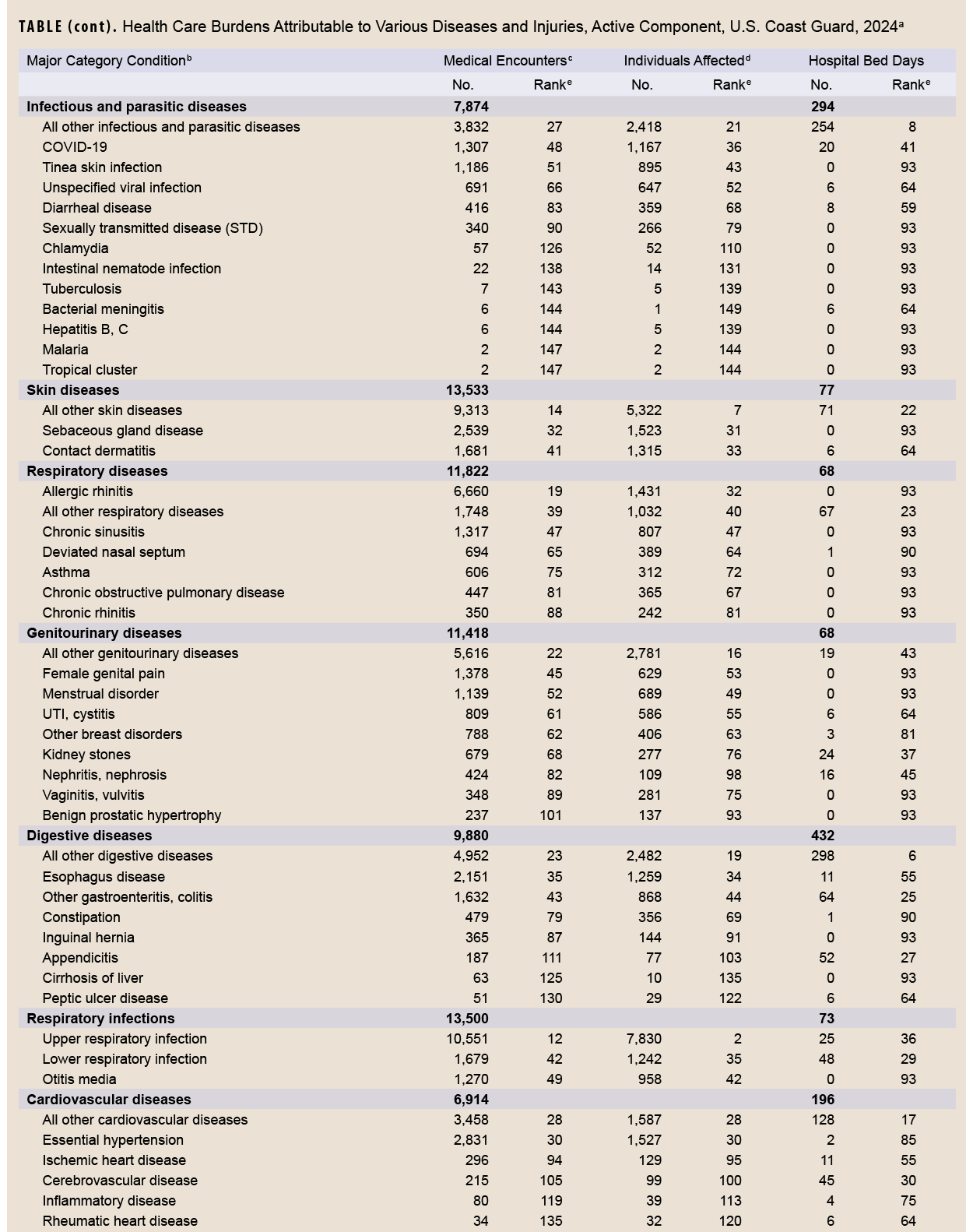
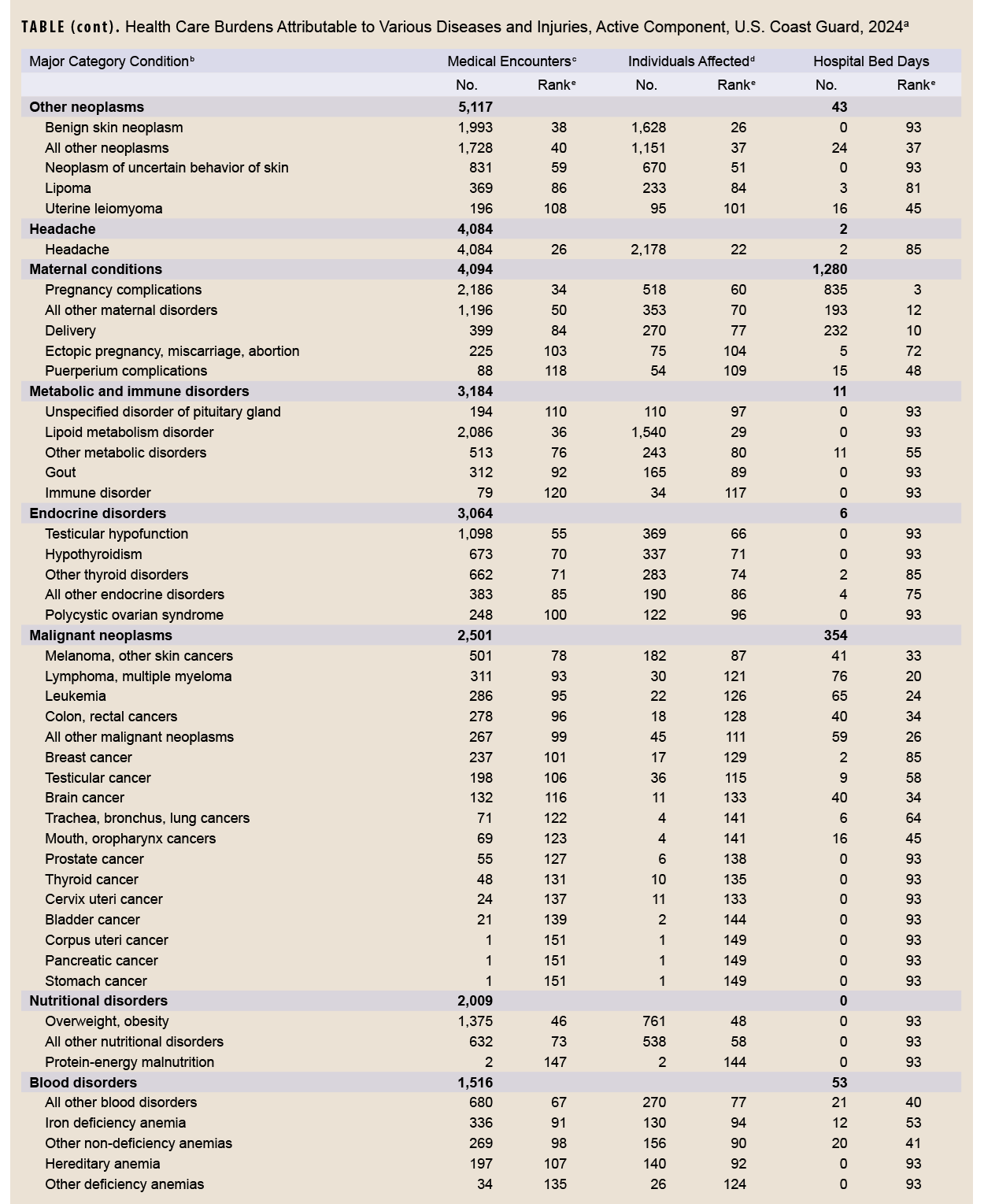
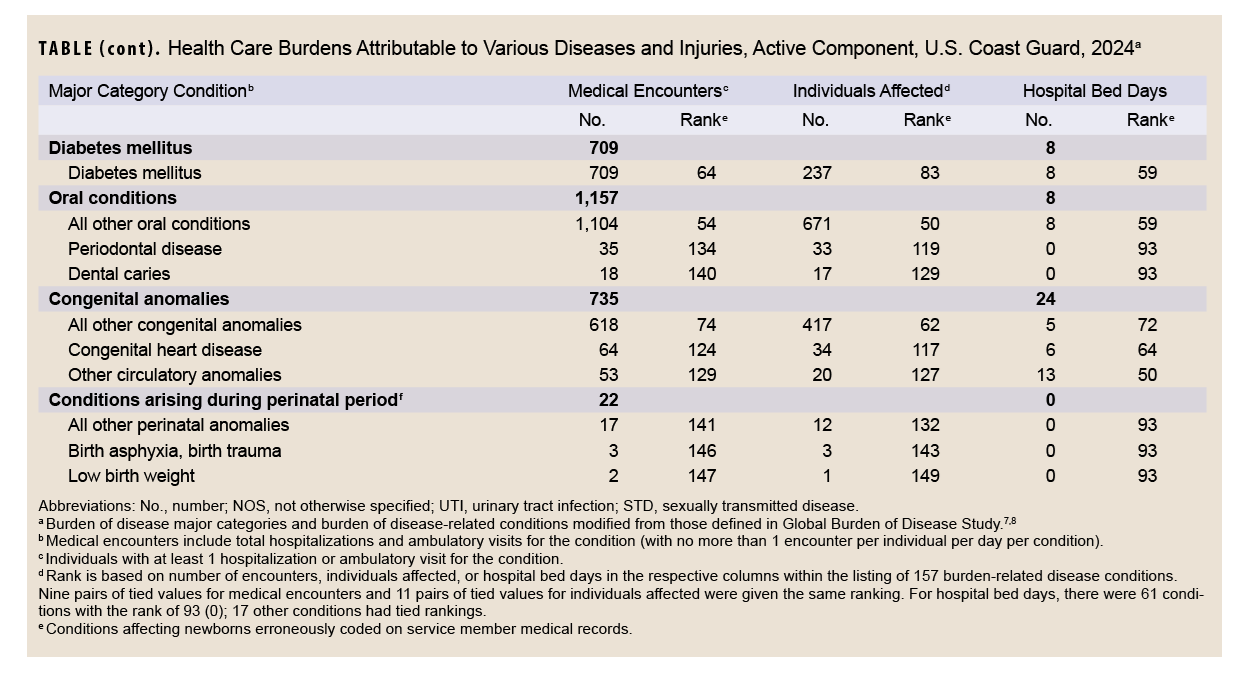
The disease-related conditions in 2024 that predominantly accounted for medical encounters among active component Coast Guard members were injuries, mental health disorders, and musculoskeletal diseases. Among the reported injuries, arm/shoulder (7.1%), knee (5.5%), foot/ankle (3.3%), and leg (2.6%) injuries accounted for the most medical encounters (Figure 2 and Table). Anxiety (8.2%), mood (4.8%), adjustment (4.5%), and substance abuse disorders (1.5%) were the four most frequent mental health disorder diagnoses. Other back problems (9.1%), all other musculoskeletal diseases (3.6%), and cervicalgia (2.2%) constituted the most medical encounters among musculoskeletal disorders. COVID-19 accounted for 0.3% of total medical encounters in 2024.
Individuals affected, by condition
The 10 categories of conditions that affected the most Coast Guard members in 2024 were all other signs and symptoms, upper respiratory infections, other back problems, refraction/accommodation, organic sleep disorders, anxiety, all other skin diseases, all other musculoskeletal diseases, arm and shoulder conditions, and respiratory and chest issues. COVID-19 affected 1,167 Coast Guard members, ranking thirty-sixth for number of individuals affected, a slight drop from thirty-third in 2023.
Hospital bed days, by condition
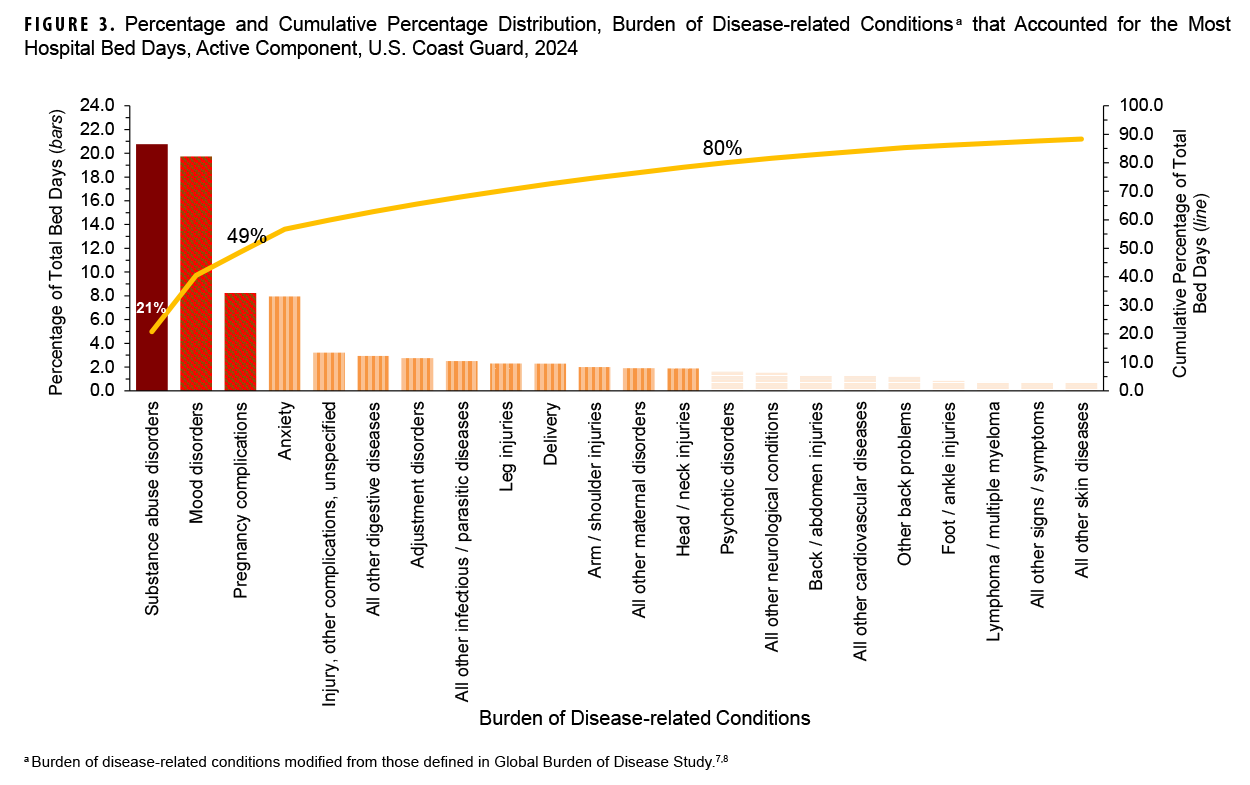
In 2024, substance abuse and mood disorders accounted for about two-fifths (40.5%) of all hospital bed days (Figure 3). Four mental health disorders (substance abuse, mood, anxiety, adjustment) and two maternal conditions (pregnancy complications, delivery) combined accounted for more than three-fifths (61.7%) of all hospital bed days (Table and Figure 3). About 12.8% of all hospital bed days were attributable to injuries. In 2024, 0.2% hospitalizations of active component Coast Guard members were due to COVID-19 (Table).
Discussion
Health care use within the Coast Guard was similar to the DOD when measured by total encounters and persons affected in 2024. The Coast Guard rate was 12.8 encounters per person (470,239 per 36,686 individuals), compared to the DOD rate of 12.3 encounters per person (14,197,058 per 1,150,913 individuals). The Coast Guard had a lower rate of hospitalization, however, with only 0.28 bed days per individual; the DOD reported 0.33 bed days per individual (378,693 per 1,150,913 individuals).
Compared to 2023, the number of Coast Guard medical encounters and hospital bed days increased by 6.2% and 13.7%, respectively, and the major category conditions increased by 5.7%. While the number of Coast Guard medical encounters and the number of major category conditions increased in 2024, the rate of change was significantly lower than in 2023 (13.3% and 12.7%, respectively). Conversely, the rate of change in hospital bed days in 2024 (13.7%) was significantly higher than in 2023 (2.3%). Mental health disorders resulted in more hospital stays than any other morbidity-related category, and mental health-related medical encounters increased by 15.5% compared to last year. In 2024, the number of individuals affected decreased by 2.0% compared to 2023.
This report is consistent with the major findings of prior annual reports on morbidity burdens among active component U.S. service members. Injuries, mental health disorders, and musculoskeletal diseases were the categories of medical conditions associated with the most medical encounters, largest numbers of affected service members, and greatest numbers of hospital bed days; maternal conditions accounted for the most hospital bed days, followed by mental health disorders. When examining ICD codes to the fourth digit character, Coast Guard and DOD service members shared many disease-related conditions: other back problems within the musculoskeletal disease major diagnostic category; arm/shoulder and knee injuries within the injury major diagnostic category; anxiety disorders in the mental health disorder major diagnostic category; and organic sleep disorders within the neurological condition major diagnostic category.
COVID-19 did not account significantly for medical encounters in 2024 compared to 2023: COVID accounted for 0.2% of hospital bed days in 2024, compared to none (0) in 2023. In addition to the waning of the pandemic, active component service members represent a relatively young and healthy population that is less likely to experience severe consequences from COVID-19 infection.
Preventable illnesses and injuries, which contribute disproportionately to morbidity and health care burdens, should be high priority targets for intervention, research, and resources. In a 2018 survey, Coast Guard members reported several mental health issues including serious psychological distress, failure to receive mental health services despite need, and other preventable risky health behaviors.5 Reliable access to health care is crucial for ensuring service members remain healthy and prepared for their missions. A lack of data hinders the Coast Guard from fully understanding health care accessibility issues, however.1 To accurately portray the true burden of disease in this population, addressing and resolving the data gaps resulting from Coast Guard hospitalizations to civilian facilities is critical and should be a priority. Improving data collection processes and systems is crucial to addressing barriers to accessing health care.
Providing a matrix of major diseases each year enables the identification, in comparison with previous reports, of potentially avoidable health conditions among military personnel, and their proximate causes. Morbidity burden report findings can aid prioritization of effective interventions, provision of necessary care, and evaluation of their impacts and cost-effectiveness.6
References
- Cohen C, Chan EW, Tong PK, et al. Health Services for Coast Guard beneficiaries: Improving access to care for active duty service members, reservists, dependents and retirees. RAND Homeland Security Research Division, Homeland Security Operational Analysis Center. 2025. Accessed Aug. 15, 2025. https://www.rand.org/pubs/research_reports/RRA3018-1.html
- United States Coast Guard. U.S. Dept. of Homeland Security. Accessed Aug. 15, 2025. https://www.uscg.mil
- Pillai S, Chau M, Kamara I, Thomas D, Iskander J. Brief report: hospitalizations among active duty members of the U.S. Coast Guard, fiscal year 2021. MSMR. 2023;30(2):3-5. Accessed Aug. 15, 2025. https://www.health.mil/news/articles/2023/02/01/active-duty-coast-guard-hospitalizations-fy-2021
- Armed Forces Health Surveillance Branch. Hospitalizations among members of the active component, U.S. Armed Forces, 2015. MSMR. 2016;23(4):8-16. Accessed Aug. 15, 2025. https://www.health.mil/reference-center/reports/2016/01/01/medical-surveillance-monthly-report-volume-23-number-4
- Pulkkinen AJ. Let’s talk about your behavioral health. My Coast Guard. U.S. Coast Guard. 2024. Accessed Aug. 15, 2025. https://www.mycg.uscg.mil/News/Article/3671040/lets-talk-about-your-behavioral-health
- Devleesschauwer B, Maertens de Noordhout C, Smit GS, et al. Quantifying burden of disease to support public health policy in Belgium: opportunities and constraints. BMC Public Health. 2014;14:1196. doi:10.1186/1471-2458-14-1196
- World Health Organization. The Global Burden of Disease: 2004 Update. World Health Organization;2008. Accessed Aug. 14, 2025. https://www.who.int/publications/i/item/9789241563710
- Murray CJL, Lopez AD, eds. The Global Burden of Disease: A Comprehensive Assessment of Mortality and Disability from Diseases, Injuries, and Risk Factors in 1990 and Projected to 2020. Harvard University Press;1996:120-122.