Depleted Uranium in the Gulf (II)

Environmental Exposure Reports are reports of what we know today about certain events of the 1990-1991 Gulf War. This particular environmental exposure report focuses on the use of, and exposures to, depleted uranium. This office published its first report on DU in August 1998. This is a second interim, not a final, report. We hope that you will read this and contact us with any information that would help us better understand the events reported here. With your help, we will be able to report more accurately on the events surrounding DU use and exposures. Please contact my office to report any new information by calling 1-800-497-6261.

Last Update: Dec. 13, 2000

Many Gulf War veterans have expressed concern their unexplained illnesses may result from their experiences in that war. In response to veterans' concerns, the Department of Defense established a task force in June 1995 to investigate those incidents and circumstances relating to possible causes. The Office of the Special Assistant to the Deputy Secretary of Defense for Gulf War Illnesses assumed responsibility for these investigations on Nov. 12, 1996, and gathered information on depleted uranium. This is the second interim report on depleted uranium; it updates the Aug. 4, 1998 Environmental Exposure Report, "Depleted Uranium in the Gulf."

To inform the public about the progress of this office, DOD is publishing on the Internet and elsewhere accounts related to the possible causes of illness among Gulf War veterans, along with documentary evidence or personal testimony used in compiling the accounts. This environmental exposure report is such an account.

I. Overview

The Gulf War was the arena for the first battlefield use of armor-piercing munitions and reinforced tank armor incorporating depleted uranium. This very dense metal is a by-product of the process by which natural uranium is "enriched" to produce reactor fuel and nuclear weapons components. The leftover uranium, 40% less radioactive than natural uranium, is called "depleted uranium," or DU.Figure 1. Abrams tank and DU sabot rounds
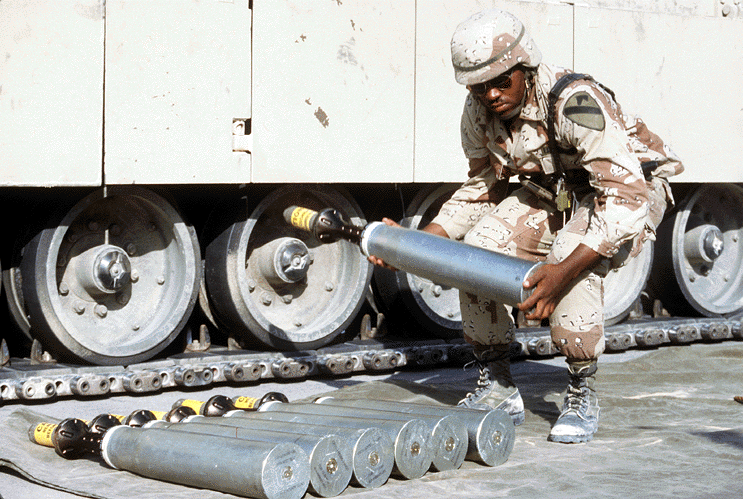
Figure 1. Abrams tank and DU sabot rounds

DU played a key role in U.S. forces' overwhelming success during the Gulf War. Machined into armor-piercing 120mm DU "sabot" rounds (Figures 1 and 2), DU penetrators were called "silver bullets" by armor forces, who quickly recognized the tremendous lethal advantage these rounds provided against enemy tanks. The extreme density of the metal and its self-sharpening properties make DU a formidable weapon; its projectiles slice through thicker, tougher armor at greater ranges than other high-velocity rounds. In addition, DU is pyrophoric -- on striking armor, small particles break off and burst into flames spontaneously in air, often touching off fuel and munitions explosions.
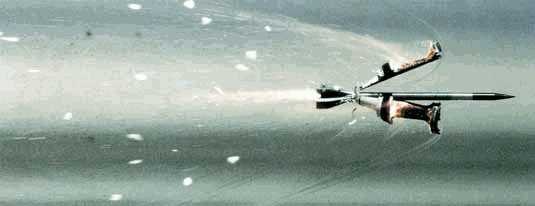
Figure 2. DU round discarding its sabot

Figure 2. DU round discarding its sabot

U.S. forces also used DU to enhance their tanks' armor protection. In one noteworthy incident, an M1A1 Abrams Main Battle Tank (Figure 3), its thick steel armor reinforced by a sandwiched layer of DU, rebuffed a close-in attack by three of Iraq's T-72 tanks. After deflecting three hits from Iraq's tanks, the Abrams' crew dispatched the T-72s with a single DU round to each. (Tab F contains an expanded version of the encounter.) Similarly, Air Force A-10 "tank-busters" and Marine Corps AV-8B Harrier aircraft fired 30mm and 25mm DU rounds, respectively, with deadly effect against Iraq's armor. (Tab F describes DU use in the Gulf.)
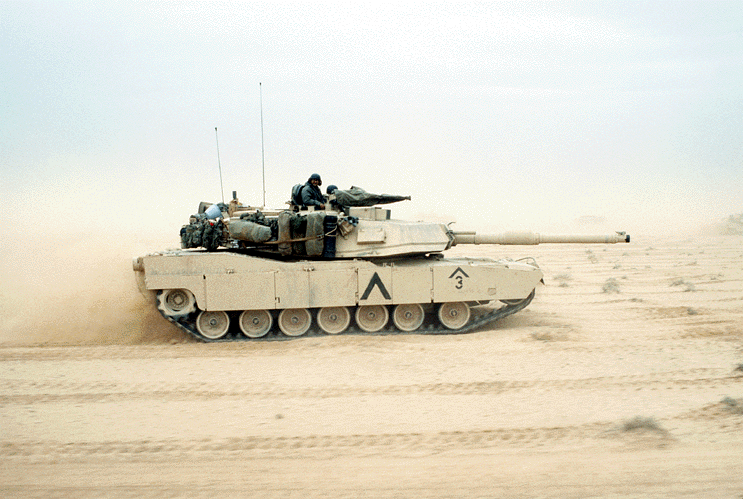
Figure 3.  M1A1 tank in the Gulf

Figure 3.  M1A1 tank in the Gulf

During the Gulf War, DU helped U.S. forces fight more effectively and defend themselves more confidently. American tanks and A-10s destroyed thousands of Iraq's combat vehicles, which had no DU armor, without enemy fire penetrating the DU armor of a single U.S. tank. Since the Gulf War, DU's battlefield effectiveness has encouraged its steady proliferation into the arsenals of allies and adversaries alike. There is little doubt, therefore, DU will be used on the battlefield against U.S. personnel in some future conflict.

While DU's combat debut showed the metal's clear superiority for both armor penetration and protection, its chemical toxicity -- common to all forms of uranium and similar to other heavy metals such as lead and tungsten -- and its low-level radioactivity raised concerns about possible combat and non-combat health risks from DU use.

To many veterans and members of the public, the term "exposure," especially when associated with the word "radiation," means health will be adversely affected. In the Gulf War, soldiers were exposed when they came in contact with depleted uranium fragments and particles formed when DU struck armor targets or when they were close to burning DU. This report uses "exposure" in much the same way as we commonly refer to people's daily "exposure" to automobile exhaust, second-hand smoke, or similar noxious or potentially toxic substances. Any effect from an exposure depends on the dose, which is a factor of the strength (how much) and the duration (how long) of the exposure. When doses are low, the exposures are very unlikely to produce any harmful effects, but when doses are high, health might be adversely affected.

The purposes of this report are to determine whether DU posed an unacceptable health risk to American forces and whether personnel had been adequately trained to deal with this risk. To accomplish these objectives, the report examines the documented incidents of DU exposure and discusses what is currently known about the potential health effects from them. This second interim report follows the same format as our initial August 1998 report with important updates on the latest findings of:

  • the Baltimore Veterans Affairs Medical Center DU Follow-up Program for "friendly fire" victims, initiated in 1993
  • the expanded VA and DOD DU Medical Follow-up Program, initiated in 1998
  • the Agency for Toxic Substances and Disease Registry's "Toxicological Profile for Uranium"
  • RAND's "A Review of the Scientific Literature As It Pertains to Gulf War Illnesses," Volume 7, "Depleted Uranium"
  • the Armed Forces Radiobiology Research Institute's and Lovelace Respiratory Research Institute's animal research efforts on implanted DU
  • the US Army Center for Health Promotion and Preventive Medicine's exposure estimates
  • the Institute of Medicine's Gulf War and Health, "Volume 1, Depleted Uranium, Sarin, Pyridostigmine Bromide, Vaccines."

Office of the Special Assistant investigators interviewed hundreds of Gulf War combatants and eyewitnesses, reconstructed numerous operations, consulted with subject matter experts, and researched the most current body of knowledge about DU's health effects and environmental impact. The investigation classifies possible DU exposures into three levels (I, II and III), encompassing 13 separate activities or incidents, shown in Table 1. We derived these levels from initial assessments of the exposures' potential relative risks, decreasing from Level I to Level III. For each level, Table 1 describes the activity or incident, current estimates of the number of personnel involved, and the personal protective equipment used, if any.

Table 1: Incident Summary

Exposure Classifications: Levels and Scenarios Number of Persons  Protective Protection Worn 
Level I
Soldiers in or on a U.S. vehicle when a DU munition penetrated it. 104 None
Soldiers who entered U.S. vehicles to rescue occupants immediately after friendly-fire DU impacts.  30-60* None
Level II
Explosive ordnance disposal and unit personnel who removed equipment and munitions from U.S. vehicles struck by DU munitions. 10-20* None
Unit personnel who performed maintenance on or recovered items from U.S. vehicles struck by DU munitions. 60-80* None
Logistics assistance representatives who inspected U.S. vehicles struck by DU munitions to determine reparability. 6-12* Some wore PPE**
Battle damage assessment team members who examined U.S. combat vehicles damaged and destroyed by DU munitions. 16 Most wore PPE**
144th Service and Supply Company personnel who processed damaged equipment, including some stuck by DU munitions 29 None
Radiation control team members. 11 Most wore PPE**
Personnel exposed to DU during cleanup operations at Camp Doha's North Compound. 600* None
Level III
Personnel exposed to smoke from burning DU rounds at Camp Doha. Hundreds None
Personnel exposed to smoke from burning Abrams tanks. Unknown None
Personnel who entered DU-contaminated equipment. Unknown None
Personnel exposed to smoke from Iraq's DU-struck equipment. Unknown None

*Number is not final; remains under investigation.

**Personal Protective Equipment includes respirator, coveralls, boots and gloves. Reports of respiratory protection ranged from the military M25 and M17A2 respirators to industrial dust mask, surgical-type paper mask, etc.

Level I includes incidents in which U.S. tanks mistakenly fired DU armor-piercing rounds into other US combat vehicles, exposing surviving crew in those vehicles to wounds from DU fragments and/or inhaled and ingested particles formed when DU munitions penetrate armor, especially tank armor. During these "friendly-fire" incidents, personnel rushing to evacuate and rescue fellow soldiers from stricken vehicles also may have been directly exposed to DU. Level I includes these immediate, direct exposures (see Tab G).

Level II exposures to DU occurred after combat, when explosive ordnance disposal personnel entered DU-struck vehicles to remove unexploded munitions. In addition to EOD personnel, battle damage assessment teams, radiation control teams, and salvage crews worked in and on the damaged or destroyed vehicles as they were processed for repair or disposal. This group also includes personnel involved in cleanup and recovery operations in the North Compound of Camp Doha, Kuwait, after a July 1991 motor pool fire in which DU munitions, among others, detonated and burned. Level II includes these personnel and others who may have come into direct contact with expended DU rounds' dust-like residue (see Tab G).

Level III, also discussed in Tab G, includes personnel whose exposure to DU was short-term and generally very low. These exposures may have occurred as personnel passed through and inhaled smoke from burning DU, casually handled spent DU penetrators, or briefly entered DU-struck vehicles on the battlefield or in salvage yards.

The amount of DU present, route of entry, solubility, particle size, other physical and chemical factors, and toxicity determine potential health effects. The U.S. Army Center for Health Promotion and Preventive Medicine completed its health risk characterization of DU in the Gulf War after we published our initial environmental exposure report on DU. They reassessed earlier Level I estimates the General Accounting Office called into question,[2] and developed Level II and III estimates. Although more refined than their original estimates, USACHPPM's new Level I estimates rely on the same test data as used previously. USACHPPM employed statistical tools to develop upper and lower limits for these Level I exposure scenarios. To improve the reliability of these Level I estimates, OSAGWI has directed and funded the US Army to further evaluate DU aerosol concentrations inside combat vehicles penetrated by DU rounds.[3] In the meantime, the Baltimore Veterans Affairs Medical Center's comprehensive medical follow-up program provides the most important health assessment for Level I exposures. The VA's studies of these Level I veterans have shown no untoward medical effects to date from depleted uranium's radiological or chemical toxicity. USACHPPM's risk assessments for the Level II and III scenarios are based on much better Department of Defense experimental data and indicate that the radiological and chemical risks for these events are well within current regulatory limits for industrial workers. These results for participants in all levels confirm our initial scenario classification.

Since 1993, the Baltimore VA Medical Center has monitored veterans seriously injured in friendly-fire incidents involving depleted uranium. While these veterans have medical afflictions resulting from their wartime injuries, the Baltimore medical evaluators report that the veterans are not sick from DU's chemical or radiological toxicity. About half the original group of 33 still have depleted uranium fragments in their bodies. The VA is following the group very carefully, administering a broad battery of medical tests to determine if the embedded depleted uranium fragments are causing any health problems. To date, the VA has seen no adverse effects in the kidney; only subtle perturbations[4] in the reproductive and central nervous systems; and elevated concentrations of urinary uranium of veterans with retained DU fragments. The study veterans without retained DU fragments generally have not shown higher than normal levels of uranium in their urine or any other medical effects from uranium.

In the summer of 1998, the Departments of Defense and Veterans Affairs extended the medical follow-up program to evaluate all individuals who were in or on vehicles struck by friendly fire, as well as those who worked around DU-struck vehicles or burned vehicles containing DU. While their DU exposures were not expected to cause health effects, these veterans are being evaluated to measure any residual DU. The follow-up program guidelines called for OSAGWI to notify these veterans of their exposures and offer a medical evaluation. Thus far, we have notified more than 200 veterans of this follow-up program. Since 1998, the Baltimore VA Program has evaluated more than 30 additional veterans involved in friendly-fire incidents, including 4 with known or suspected embedded DU fragments. In addition, as part of the Gulf War Registry program DOD and the VA agreed to perform a physical examination, collect a questionnaire for DU exposure, and collect a 24-hour urine sample to measure urinary uranium for any concerned Gulf War veteran. To date, 398 veterans have requested and received this examination and are at various stages of completion.[5]

Since we published our initial DU environmental exposure report in August 1998, three major scientific reviews of the toxicology of uranium and depleted uranium have been published. The first was the RAND Corporation's comprehensive medical literature review on depleted uranium's health effects. The study is one of eight the Special Assistant to the Deputy Secretary of Defense for Gulf War Illnesses commissioned from RAND's National Defense Research Institute. The second review, dated September 1999, is the Toxicological Profile for Uranium published by the Department of Health and Human Services' Agency for Toxic Substances and Disease Registry. ATSDR toxicological profiles are recognized internationally as an authoritative source of information about hazardous substances' human and environmental effects. The third review was "Gulf War and Health, Volume 1 Depleted Uranium, Pyridostigmine Bromide, Sarin, Vaccines" recently completed by the Institute of Medicine at the request of congress. The National Academy of Sciences established the IOM to perform independent studies. These three reports assess the chemical and radiological effects of uranium on health.

RAND concluded that medical literature contains no evidence of radiological health effects resulting from exposure to uranium or depleted uranium.[6] RAND also concluded that while uranium in large doses can cause changes in kidney function and at very high levels result in kidney failure, no increased kidney disease has been observed in a relatively large occupational population chronically exposed to natural uranium. The RAND study also cited the absence of kidney effects in friendly fire victims with embedded DU fragments in the Baltimore VA follow-up program despite the presence of elevated urine uranium levels.[7] The ATSDR profile concluded that because of scientific evidence and the low radioactivity of natural and depleted uranium, it expects no radiological health hazard from inhalation, dermal, or oral exposure to natural or depleted uranium.[8]

In September 2000 the Institute of Medicine released its report on depleted uranium, chemical warfare agents (sarin and cyclosarin), pyridostigmine bromide, and vaccines (anthrax and botulinum toxoid). In assessing the two primary concerns commonly associated with uranium exposures (renal dysfunction and lung cancer) the IOM concluded that there was "limited/suggestive evidence of no association" between uranium exposure and renal dysfunction nor to lung cancer at cumulative exposures less than 20 rem (a unit of radiation dose). Twenty rem is at least four times higher than the highest radiological doses estimated for Gulf War veterans. The finding of "limit/suggestive evidence of no association" is one of five categories used by IOM to classify the evidence of association between exposure and a health outcome. It is the most definitive category available, indicating that no cause-effect relationship has been established between exposure to uranium and the suspected adverse health outcomes; i.e., renal dysfunction and lung cancer at cumulative exposures less than 20 rem. The IOM report also stated the data were inadequate or insufficient to determine whether exposure to uranium is associated with a variety of other health conditions including bone cancer, lung cancer (at cumulative exposures greater than 20 rem), lymphatic cancer, nervous system disease, nonmalignant respiratory disease, and other various health outcomes.[9]

Based on data developed to date, we believe that while DU could pose a chemical hazard at high intakes, Gulf War veterans did not experience intakes high enough to affect their health. Furthermore, the available evidence indicates that due to DU's low-level radioactivity, adverse radiological health effects are not expected. The available scientific and medical evidence to date does not support claims that DU caused or is causing Gulf War veterans' illnesses. Nevertheless, medical research to date has suggested several areas of concern for soldiers with embedded DU fragments that warrant further medical follow-up which DOD and the VA are committed to perform.[10]

This investigation identified significant shortcomings in how the military trained US personnel to operate in DU-contaminated environments. Pre-war training was given only to select military occupation specialties, leaving most service members unaware of DU's use and simple measures that could have mitigated DU exposures. This paper outlines the steps the services have taken to correct this shortfall.

The report begins with a short, but important lesson on DU -- what it is and the potential health risks of its chemical and radiological properties (see Section III, "Depleted Uranium -- A Short Course"). The report then describes DU exposures that occurred during the Gulf War and relates those exposures to possible health effects (see Section IV, "Potential Health Effects from DU Use in the Gulf Theater, 1990-1991"). Next, we address environmental studies of various DU munitions, environmental assessments of DU contamination on the battlefield, results of current medical studies, future monitoring efforts, and ongoing and planned research (see Section V, "Follow-Up"). The report then presents some lessons learned since the Gulf War (see Section VI, "Lessons Learned and Recommendations"), addressing pre-Gulf War training shortfalls and reporting on the status of corrective action. The Conclusion summarizes the report's contents and relates key findings and conclusions based on evidence analyzed to date.

II. Methodology

Our investigation of DU as a potential cause of Gulf War veterans' illnesses adopted a risk assessment methodology patterned on the U.S. Environmental Protection Agency's. This process, outlined in Tab D, estimates the health risk from contaminant concentrations, exposure duration, and contaminant toxicity characteristics. It consists of four steps: hazard identification, toxicity assessment, dose assessment, and risk characterization, defined below:

  • Hazard identification -- who was exposed, and how? Which incidents warrant a full investigation?
  • Toxicity assessment -- what are the known medical effects of human exposure to DU? At what levels of exposure do these effects occur? How can the effects be diminished?
  • Dose assessment -- how much DU were soldiers exposed to? How much did they take into their bodies? What chemical or radiological doses do these intakes represent?
  • Risk characterization -- using validated toxicity and dose information, what medical effects can be anticipated? How serious are they? What is the risk they will occur?[11] How can the effects be communicated to those affected?

Performing this assessment for DU involves the cooperative efforts of several organizations:

  • the Office of the Special Assistant for Gulf War Illnesses for hazard identification and risk characterization
  • the RAND Corporation for toxicity assessment
  • the U.S. Army Center for Health Promotion and Preventive Medicine for dose assessment (exposure and risk assessment)
  • the Department of Veterans Affairs and DOD DU medical surveillance programs for medical follow-up.

The Office of the Special Assistant for Gulf War Illnesses focused on determining what happened, what exposures may have occurred, and who may have been exposed. The Office divided exposures into levels and categories to relate them to toxicity and dose information.

To develop a toxicity assessment, the RAND Corporation conducted an independent review of available peer-reviewed medical and scientific literature on uranium's known medical and health effects, concentrating on the health effects of internalized uranium.

USACHPPM completed the exposure and risk characterization by estimating the amount of DU that may have been taken into the body for each of the 13 exposure scenarios (Table 1). Since the chemical intakes and radiological doses were not directly measured when the incidents occurred, USACHPPM used the best available data, combined with scientific and engineering principles and data from relevant tests, to develop its human exposure and health risk characterization. Specific USACHPPM activities included:

  • reviewing test data on DU's behavior during fires and impacts with armor
  • evaluating the usefulness and appropriateness of this data in modeling the amount of DU a soldier might take in and retain in the body through inhalation or ingestion
  • identifying data gaps
  • estimating the radiological and chemical doses for each of the 13 activities involving possible DU exposure.

The VA, in cooperation with the DOD, has medically evaluated 33 friendly fire victims (Level I veterans) since 1993. These veterans, about half still retaining embedded DU fragments, received the highest DU exposures. In 1998 the VA and the DOD expanded the follow-up program to offer urine uranium evaluations to all Level I veterans and to those level II veterans who worked in or on DU contaminated vehicles.

Finally, we incorporated the results of USACHPPM's dose assessments and RAND's medical literature review, both peer reviewed, and results from medical follow-up to clearly and concisely discuss those risk estimates for each of the 13 exposure scenarios.

III. Deployed Uranium - A Short Course

This section discusses DU's chemical, physical, and radiological properties, the ways those properties may affect human health, and the principles and standards for protecting soldiers and the public from harm. These discussions address DU's chemical toxicity, which is the primary concern, and summarize DU's radiological toxicity.

Figure 4.  Cutaway of DU sabot round

Figure 4.  Cutaway of DU sabot round

Very little literature directly addresses DU's health effects. However, extensive material deals with the effects of natural uranium, which is relevant to assessing DU's effects. Chemically, DU has the same properties as natural uranium. Radiologically, DU emits types of radiation similar to natural uranium's, but DU is 40% less radioactive than natural uranium.[12]

DOD evaluated DU's chemical, physical and radiological properties and their health and environmental implications as part of the standard acquisition, test, and evaluation process for new weapons systems. Throughout the DU weapons development program, DOD has adhered to a highly regulated development and procurement process involving extensive hazard assessments, tests, and evaluations. (Tab E comprehensively discusses the DU research and development program, including specific tests and evaluations; Tab L summarizes research reports.)

1. DU's Chemical Properties

Uranium is all around us. A heavy metal similar to tungsten and lead, it occurs in soils in typical concentrations of a few parts per million (equivalent to about half a teaspoon of uranium in a typical 8-cubic yard dump truck-load of dirt). The Agency for Toxic Substances and Disease Registry estimates there are typically 4 tons of uranium in 1 square mile of soil 1 foot deep[13] and that we add 180 metric tons (about 198 US tons) of uranium decay products to US agricultural lands each year due to the trace amounts of uranium in phosphate fertilizer.[14] We all take in uranium every day from the air we breathe, the water we drink, and the foods we eat. On average, every day each of us takes in 1.9 micrograms (about two-millionths of a gram) of uranium from food and water and inhales a very small fraction (7 x 10⁻³ or 0.007) of a microgram.[15]

When DU rounds strike an armored target they generate fragments and uranium oxides. (See Tab M for more information on DU oxides or aerosols.) The particle sizes vary greatly, from larger, easily visible fragments to very fine, respirable particles that can settle in the lungs. Whether large enough to see or too small to observe, DU particles and oxides retained in the body have different solubilities -- that is, they dissolve at different rates in bodily fluids, which act as solvents.

Some have suggested these aerosols can kill anyone in a tank, travel tens of miles from the source, and thus present a hazard to everyone on the battlefield. In reality, while respirable-size particles can travel with air flow for some distance, test data indicate airborne concentrations at even 5 to 10 meters from the point of impact are not a radiological or chemical concern.[16] Airborne particles are transported according to physical laws that disperse, mix, and dilute the concentration of material in the air. Typically, the farther a person moves away from a source, the lower the concentration, intake, and radiation dose for the same exposure time. In this context, the correct question is not "Have I been exposed?" but rather "How much was my exposure?"

The solubility of uranium compounds determines how quickly the body absorbs them from the lung and how efficiently the body absorbs them from the intestines. Uranium solubility varies greatly depending on the particular compound -- or form of uranium -- and the solvent. The human body's natural fluids, water-based, form the solvent that acts on DU once it has entered the body. In this report, "soluble" and "insoluble" depleted uranium refer to their rate of uptake by the body. "Soluble" chemical forms are absorbed from the lungs within days while "insoluble" forms generally take months to years. Toxic chemical effects, if any, are more likely to be associated with the more soluble forms of uranium while radiation effects, if any, are more likely to be associated with the insoluble forms, such as particles that are deposited in the lungs and retained for extended periods of time.

2. Chemical Effects

Uranium can be chemically toxic when large amounts enter and are retained in the body, absorbed into the blood, and carried to body tissues and organs. The severity of the toxic effect depends on the amount the blood absorbs, how that amount is distributed among the body's organs, and uranium's toxic effects in those organs. In the Gulf War environment, DU entered the body through inhalation, ingestion, or wounds -- in the form of uranium metal (from flying fragments and unoxidized DU) and uranium oxides (mostly depleted triuranium octaoxide (U3O8) but also depleted uranium dioxide (UO2) and depleted uranium trioxide (UO3) from DU impacts on target vehicles or fires).[17]

The three uranium oxides of primary concern (UO3, UO2, and U3O8) are relatively insoluble, tending to dissolve slowly (weeks for UO3 to years for UO2 and U3O8) in bodily fluids.[18] Once dissolved, uranium may react with biological molecules and, in the form of the uranyl ion (UO22+) exert its toxic effects. According to research, the kidney is the organ most sensitive to chemical effects from excess uranium. Depending on the concentration of uranium in the kidney, these toxic effects may include damage and death of kidney cells, decreasing the kidney's ability to filter impurities from the blood.[19]

DU oxides, formed during the Gulf War when DU struck armor or burned in fires, could enter soldiers' bodies when they inhaled them from the air inside combat vehicles or from plumes outside the vehicles, or when they ingested residues inside vehicles by transfer from contaminated surfaces to the hands and then to the mouth. About 95 percent of larger (greater than 10 �m [micrometer] Aerodynamic Equivalent Diameter inhaled particles deposit in the upper respiratory tract. Most of these clear to the pharynx and are swallowed or blown out of the nose. Swallowed particles clear through the GI tract or the blood. Below 10 �m AED, deposition decreases in the upper respiratory tract, but increases in the deeper pulmonary region (bronchioles and alveoli). The amount of DU that gets absorbed into the blood and deposited in the kidneys and other organs depends on several factors (e.g., particle size, solubility, and breathing rate of the exposed person). USACHHPM determined that 6.4 percent of inhaled soluble DU and 0.3 percent of inhaled insoluble DU are ultimately transferred to the kidneys.[20] Current information indicates 2 to 5 percent of ingested, soluble DU is absorbed into the blood from the intestines.[21] The remaining 95 to 98 percent of the ingested, soluble DU is eliminated rapidly through the intestines. Only about 0.2 percent of ingested, insoluble DU is absorbed into the blood[22] from the GI tract and the remaining 99.8 percent is eliminated quickly through the intestines.

Once absorbed in the blood, up to 90 percent of the dissolved uranium is excreted within the first few days after a single exposure.[23] The remaining 10 percent deposits in the bones and other organs, where it is excreted over a longer period of time. Insoluble uranium oxides, if inhaled, can remain in the lungs for years, slowly absorbing into the blood and then being excreted in urine.[24]

Numerous studies of the effects of inhaled or ingested uranium in humans have not conclusively documented increased death rates or effects on the immune or nervous systems.[25] Other studies have looked at several common effects uranium could cause. Uranium miners have experienced an increased risk of lung cancer, which scientists agree is attributable to other substances, such as tobacco smoke, radon, and radon's short-lived radioactive decay products.[26] Heavy metals also may affect the liver, but high doses are required to produce observable effects. Although animal studies have suggested possible liver injury from uranium, it has not been found in anyone exposed to DU, including workers at uranium testing sites, even when exposures were much longer and much higher than Gulf War veterans'.[27] Some studies have noted reproductive effects in some groups of workers handling uranium, but the exposures always were combined with exposures to other substances (e.g., radon or tobacco products) that the studies usually identified as the cause. Animal studies show some effects on DNA and other systems, but the exposure levels are orders of magnitude higher than those possible in military or industrial settings. Research on embedded DU (see Section V) indicates possible effects on litter size in rats.[28]

Particularly susceptible to damage from high doses of uranium is the kidney, where uranyl-carbonate complexes (the primary form of uranium circulating in the blood) decompose in the acidic urine, causing health concerns. Uranium's toxic effects on the kidney resemble those caused by other heavy metals, such as lead or cadmium. As the target organ for uranium, medical experts would expect the kidney to show the most dramatic effects from uranium exposure. Nevertheless, although animal studies have shown effects in the kidney, these kinds of effects rarely have been seen in humans -- especially for exposures to insoluble uranium oxides.[29]

3. Chemical Toxicity Standards and Guidelines

Since the kidney is recognized as the target (most sensitive) organ for uranium exposure, regulators have attempted to set a standard for permissible uranium concentration in the kidneys based on studies of uranium's effects in animals and humans. In 1959 the International Commission on Radiological Protection calculated a value of 3 micrograms (m g) of uranium per gram of kidney tissue as a maximum permissible organ concentration in the kidney based on radioactivity rather than chemical toxicity.[30] Reviews of this MPOC have raised several questions about its validity.[31] In those reviews, animal species tested, chemical form of uranium, total dose, and rate of administration contributed to the variability of the amount of uranium in the kidney needed to produce effects. Some observations reported mild kidney effects even at amounts about 10 times lower than 3 m g of uranium per gram of kidney tissue. Nevertheless, occupational exposure guidelines based on the MPOC seem to have protected humans adequately. Therefore, we have selected 3 m g of uranium per gram of kidney tissue as a guideline for assessing exposures in our investigation.

Operational guidelines based on the MPOC suggest temporary and permanent kidney effects may occur for inhaled soluble DU intakes above 8 milligrams (mg) and 40 mg, respectively.[32] These values may need to be adjusted for specific situations.[33] For example, in 10 CFR 20.1201(e),[34] the Nuclear Regulatory Commission includes a requirement to limit soluble uranium intakes to 10 mg in a week in consideration of uranium's chemical toxicity. The NRC extended this guidance in 10 CFR 76 to assessing the adequacy of protecting the health of the public from accidents involving uranium at gaseous diffusion plants. The final guidance establishing 10 CFR 76 (59 Federal Register (FR) 48944, September 23, 1994) specifically stated, "The NRC will consider whether the potential consequences of a reasonable spectrum of postulated accident scenarios exceed 0.25 Sv (25 rem), or uranium intakes of 30 mg."

Few human studies verify kidney damage at these thresholds -- even under exposure conditions of a single exposure to soluble uranium compounds that exceed occupational limits. These intake thresholds are worst-case benchmarks because they assume intakes of soluble uranium during a single exposure and therefore do not take into account the body's ability to eliminate 90 percent of uranium from the blood every 3 days. Gulf War veterans who were exposed to depleted uranium generally experienced repeated, small contacts with insoluble forms of uranium, an exposure scenario that would be expected to produce even less kidney damage.

The Occupational Safety and Health Administration and American Conference of Governmental Industrial Hygienists have established long- and short-term occupational exposure standards for uranium inhalation by workers based on uranium's chemical toxicity to the kidney. OSHA's Permissible Exposure Levels and the ACGIH's Threshold Limit Values (TLV� ) are based on the principle that a threshold exists below which no adverse health effects occur. As the exposure increases above the threshold, the adverse health effect becomes more severe. Both the PEL and the TLV� are "time-weighted average concentration[35] for a conventional 8-hour workday and 40-hour workweek, to which it is believed nearly all workers may be repeatedly exposed, day after day, without adverse effect."[36]

Table 2 lists PELs for various metals as a general comparison of the metals' relative toxicity. Although the PELs for uranium are for natural uranium, DU's chemical effects are identical.[37]

Table 2. Comparison of OSHA PELs for metals from inhalation exposures

Metal Permissible Exposure Limit (mg/m3)
Lead 0.05 
Cobalt metal, dust, and fume (as Co) 0.1

Uranium (as U); soluble compounds

0.05
Uranium (as U); insoluble compounds 0.25
Nickel metal and insoluble/soluble compounds (as Ni) 1