Keith Bass, assistant secretary of war for health affairs, shared his vision of “readiness by design” as a blueprint for stronger federal health care collaboration to protect the nation’s security and health at a recent meeting of federal health professionals.
The success of the Military Health System “is built, deliberately, through policy choices, strategic investments, disciplined execution, and the unmatched commitment of the federal health workforce,” he emphasized.
“In the Department of War, readiness is our central obligation,” he said. “Ready to deploy. Ready to fight. Ready to return home, and ready to thrive long after the mission is complete.”
Readiness includes putting an emphasis on “superior brain health, faster return-to-duty, advanced trauma and rehabilitation, resilient mental health support, forward medical care in austere and denied environments, and medical countermeasures for emerging biological threats,” added Bass.
“These are not optional. They are essential.”
Proactive continuum of care
Bass stressed a service member's health is a product of their entire life journey, meaning care does not begin or end with their time in uniform. He described a critical "continuum of care" that spans three phases of their lives:
- Before service: “These factors shape physical health. They shape mental health. And they shape resilience, long before anyone takes an oath.”
- During service: “That foundation is stressed — and often tested by — operational reality, deployments, combat, training at the edge of human performance, environmental and occupational exposures, separation from family, and the cumulative effect of high operational tempo.”
- After service: “The story does not end. For many veterans, the health consequences of service emerge or intensify years later — from physical injury and chronic disease to traumatic brain injury, PTSD, and suicide risk.”
He said the “impact does not stop with the individual. It touches families. It touches caregivers, and it touches the next generation,” which necessitates “a health care system that is not only reactive to immediate needs but also proactive in its long-term support.”
Partnerships as force multipliers
Bass described federal health care as a team effort that blends military medicine, veteran care, public health, research, and interagency partners — all with a mission that demands integration, not just coordination.
He highlighted several examples of impactful collaboration between the MHS and government agencies:
- Food and Drug Administration: “Our partnership with the FDA has led to the authorization to use freeze-dried plasma to treat severe hemorrhage on the battlefield. A game-changer for saving warfighters’ lives, especially in remote environments.”
- Department of Veterans Affairs: “Through partnership with the VA, we’re bridging the continuum of care for service members and veterans by sharing our facilities and caring for each other’s patients,” Bass said. “For providers, it improves skills. For patients, it increases access to high-quality care.”
- Frontlines of Public Health: “Officers from the commissioned corps of the U.S. Public Health Service serving in scientific, public health, and clinical roles in military hospitals and clinics, are also an essential part of military medical health care,” he noted.
- Health record modernization: The DOW’s MHS GENESIS electronic health record and the VA’s EHR Modernization are linked and in time will create a “seamless electronic health record across a lifetime of service … supporting readiness, prevention, and long-term care.”
He called for more collaboration across the federal health care system, saying, “Our greatest successes happen when we function as one system, not many separate ones.”
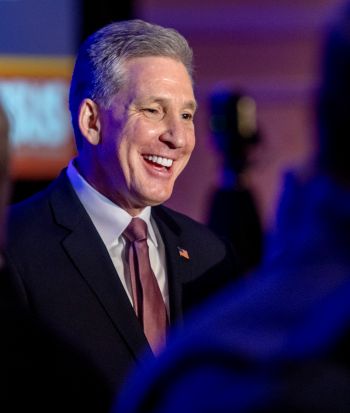 Keith Bass, assistant secretary of war for health affairs, outlines his framework for a stronger federal health workforce in support of warfighter readiness at the Society of Federal Health Professionals’ annual meeting in National Harbor, Maryland, March 4, 2026. He highlighted federal partnerships as a vital component to ensuring high-quality warfighter care, stating, "Together, we'll build a stronger, more modern, more resilient system. Together, we'll protect those who serve."
The workforce: the system's backbone
While discussing technological advancements, Bass was grounded in the human element.
“None of this matters without the people who make the system function,” he said, describing “unprecedented pressures” of the workforce, including staffing shortages, complexity, operational tempo, administrative burden, and burnout.
It’s the MHS’ responsibility to strengthen its workforce through multiple components, Bass explained, such as:
- Modernizing training utilizing simulation, augmented reality, and artificial intelligence
- Streamlined credentialing, privileging, and professional development pathways
- Improving retention strategies and expanded mental health support for providers
- Creating new opportunities for advancement, specialization, and leadership
"Behind every readiness metric is a clinician making critical decisions under pressure," he noted. "Our federal health workforce — uniformed, civilian, and contracted — is one of the most skilled and dedicated groups in the world.”
Innovation priorities for the 'future fight'
“Innovation is not a buzzword; it is a readiness requirement,” Bass emphasized.
The future of federal health care “demands that we accelerate responsibly, ethically, and strategically,” he said, highlighting key areas of focus:
- AI-enabled decision support
- Warfighter brain health
- Trauma and blood systems
- Regenerative medicine
- Digital and remote medicine
- Predictive analytics
“A healthier force is a more lethal force,” Bass said. “A medically ready Soldier, Sailor, Airman, Guardian, or Coast Guardsmen is one of our most important strategic advantages.”
Integration: a readiness imperative
“A healthier future requires a single federal health team moving forward with a shared purpose,” he stressed. This should include “readiness-focused modernization, workforce development and retention, interoperability and data integration, accelerated innovation, patient experience and access, prevention and resilience, and interagency unity.”
“These are not aspirations. They are commitments,” Bass said. “Integration is both an operational reality and a readiness imperative,” he said.
Bass concluded with a call to join together for warfighter health.
"The future of federal health care will not be defined by what we manage individually, but by what we design together," he said. "Together, we'll build a stronger, more modern, more resilient system. Together, we'll protect those who serve".
“None of this happens by accident — it happens by design.”